Four times in the space of a minute, Sumit Ray stops himself and repeats the same line: "আমি অর্গান প্রিন্ট করছি না" — I am not printing organs. It's a necessary correction. The episode is titled after the question "Organ Printing কি আদৌ সম্ভব?" (Is organ printing even possible?), and it would be easy to assume that a 3D printing founder sitting across from host Barun on the Deep Down Show has already done it. He hasn't. What Ray offers instead, across a compact 42-minute conversation, is a founder's honest map of where 3D printing has actually reached, in surgical planning, on a launch pad, aboard the International Space Station, and in his own small workshop, and where it clearly hasn't.
Ray runs Ray 3D Prints and came to the field from an unusual direction: his academic background is biotechnology, not engineering. He tells Barun that his interest in 3D printing traces back to a family situation. His maasi's (aunt's) family went through a difficult stretch when a relative needed a liver transplant, and finding a matching donor proved far from easy. Watching how scarce donors were, and how expensive transplant surgery already is, is what first got him thinking, around 2017, about whether an organ could one day be printed instead of donated.
From that personal starting point, the conversation opens outward: what 3D printing can already do in medicine, in construction, and even in space; a cosplay commission that ended up winning an event in Kolkata; and the practical grind of building a 3D printing business in India, from the cost of a first printer to a GST system that never quite knew what category to put it in.
A Family's Search for a Donor
Ray studied biotechnology, and it was that background, combined with his family's experience, that pointed him toward 3D printing in the first place. Around 2017, while his aunt's family was dealing with the difficulty of finding a liver donor for a relative's transplant, he came across 3D printing as an emerging technology and had what he calls his first real spark of an idea: if a liver, or any organ, could be printed instead of donated, it would solve a problem that a shortage of donors and the high cost of transplant surgery make genuinely hard.
He is careful, though, not to let that origin story overstate what he has actually built. He has not printed an organ, and he frames the idea as a direction worth pursuing rather than a product he or anyone else has delivered.
What 3D Printing Already Does in Medicine
The medical use Ray can point to today is narrower, and more established: surgical planning. Before an operation, he explains, a doctor can work from a 3D rendered or 3D printed model of the relevant part of a patient's anatomy, worked out in software, to study exactly where and how to operate. The printing itself isn't always necessary; sometimes 3D rendering software alone gives the surgeon what they need to plan the procedure before ever picking up a scalpel.
The other concrete medical application he describes is prosthetics. Traditional manufacturing of a custom prosthetic limb, he says, could take months, leaving a patient without a hand or a leg to manage in the meantime. 3D printing collapses that timeline and lowers the cost, which Ray argues matters most for people who could not afford a traditionally manufactured prosthetic at all. His hope, stated plainly in the episode, is that hospitals eventually run their own in-house 3D printing setups for exactly this kind of case.
A Rocket, a Space Station Printer, and India's First 3D-Printed House
Ray widens the lens beyond medicine to make the case that 3D printing is already reshaping how things get built. He describes a rocket that was largely constructed using 3D printing technology and successfully flew to space, built far faster than traditional manufacturing, which he says relied heavily on manual labour and took much longer. Around the same period, he says, a dedicated 3D printer was tested aboard the International Space Station specifically to check whether printing works in a gravity-less environment; the test succeeded, and the same idea now underpins how astronauts on the station can print equipment they need rather than wait for a resupply.
Closer to the ground, Ray points to India's first 3D printed house, built in Chennai. Its walls went up layer by layer, concrete deposited in place by machine rather than laid by hand, and the structure was completed in a matter of days rather than the months a conventional build would take. He notes that the technique is still far from popular in India, but says that if it takes hold, the impact on construction timelines and cost could be significant.
The Iron Man Suit That Won Kolkata Cosplay
Some of Ray's most tangible work has nothing to do with medicine or aerospace. Cosplay, he tells Barun, has grown fast in India, driven by fans who want to physically become the characters they follow, whether that's Iron Man or the Hulk. Last year, a client approached Ray 3D Prints wanting a full Iron Man suit built to their own body, supplying their own reference photos and video. Ray's team printed the suit, and the client went on to win at the Kolkata Cosplay event wearing it. It's a small, concrete example of a business model that doesn't need a hospital or a launch pad: 3D printing something specific, for one person, that would be impractical to manufacture any other way.
Why 3D Printing Hasn't "Hit" Yet
Pressed by Barun on why 3D printing isn't more visible in India despite everything it can already do, Ray's answer is about habit as much as technology. People are used to knowing exactly which shop sells what they need; a 3D printer only becomes relevant once that everyday habit runs out, and for most people it hasn't yet. He sees the realistic early market as small entrepreneurs experimenting with the technology rather than large-scale manufacturers replacing their existing lines.
The other barrier is knowledge. Operating a 3D printer well, Ray says, takes far more understanding than people assume, from design to the machine's day-to-day operation, and commercial printers and manufacturing-grade printers are not the same category of machine at all. Spare parts are also harder to source in India than abroad, which makes running printers at scale more difficult here. Building the ecosystem, in his view, has to happen step by step, starting with basic awareness before people jump in.
Starting Ray 3D Prints: Costs, GST, and Going It Alone
Ray began seriously researching 3D printing between roughly 2017 and 2019 before fully starting Ray 3D Prints around 2020. He tells Barun that a starter printer costs somewhere in the range of ₹40,000 to ₹50,000, enough to begin taking on print jobs. In the early days, he says, maintenance and part failures could eat close to ₹10,000 to ₹20,000 in a given month, but he maintains the business was profitable from the start despite that.
The company still takes most of its orders directly, by phone and WhatsApp, and through a catalogue on its own website, rather than through Amazon or Flipkart. Part of the reason, Ray explains, is that 3D printing never got a clean category of its own under GST, which made the process of listing on major marketplaces more complicated than it was worth. Beyond printing itself, Ray 3D Prints also offers custom design work, so a client without a ready 3D model can still get something built.
Ray runs the company with a business partner on a 50-50 basis and two employees, needed mainly because monitoring several printers running at once, and readying the next job the moment one finishes, is more work than it sounds. He says the process is automated enough that he could run a single printer largely on his own.
On learning the craft itself, Ray is blunt: there is no school or college course in India that teaches 3D printing. He recommends short, basic workshops or crash courses to get comfortable with the fundamentals, but says real competence only comes from hands-on practice with an actual printer, calling it a genuine risk that anyone getting into the field has to take on. Part of that learning curve is a separate machine language of its own: 3D printers run on G-code, short for Geometrical Codes, distinct from the C, Python or Java that most students already encounter in school.
Who is Sumit Ray
Sumit Ray is the founder of Ray 3D Prints. He studied biotechnology rather than engineering, and his interest in 3D printing grew out of a family experience with the difficulty of finding an organ donor for a liver transplant around 2017. He began researching the technology seriously between 2017 and 2019 and started Ray 3D Prints around 2020, running it with a business partner and two employees while doing much of the day-to-day operation himself. His work has ranged from a client's Iron Man cosplay suit that won at the Kolkata Cosplay event to running introductory 3D printing awareness workshops at engineering colleges, including at NIT Durgapur, where a Facebook photo tag is how host Barun first found him.
Why This Conversation Matters
3D printing in Bangla media tends to arrive either as a viral novelty clip or as science-fiction speculation about printed body parts. Ray's episode does neither. He is upfront about the gap between what he wishes were possible and what actually works today: surgical planning models instead of printed organs, a 3D printed house in Chennai rather than a national construction shift, one Iron Man suit rather than a mass market. That honesty, paired with hard numbers on what it costs to start and why the paperwork alone can slow a small manufacturer down, makes this a useful listen for anyone curious about deep-tech entrepreneurship in India rather than the hype around it.
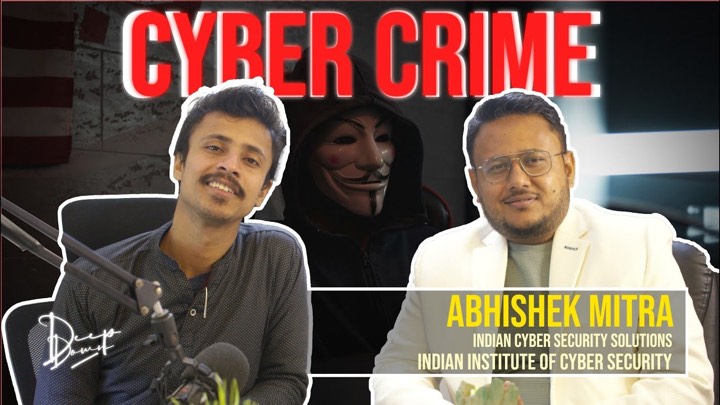
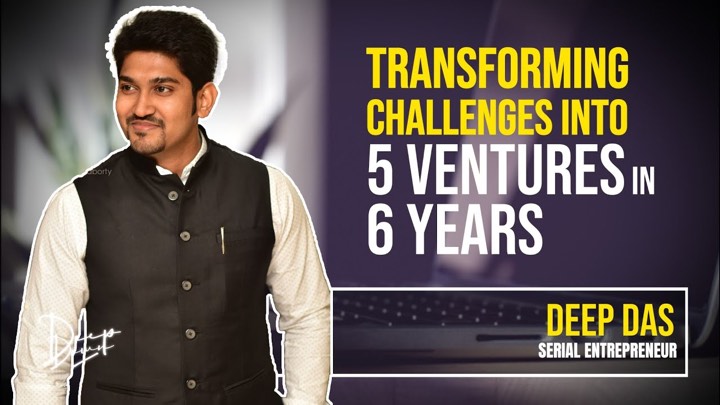
It sits well alongside two other Deep Down Show conversations about building something technical from very little: Abhishek Mitra's episode on cyber security, another founder who built a company outside the usual metro-city, well-funded path, and Aarijit Hajra on AI, business and education, which covers the same tension between a new technology's promise and the ecosystem needed to actually use it. For a solo-founder story built the hard way, see also Deep Das on going from rags to riches.
Frequently asked questions
Can organs really be 3D printed today?
No. Sumit Ray repeats several times in the episode that he has not printed an organ. The idea occurred to him around 2017, when he learned about 3D printing while his aunt's family was struggling to find a liver donor, but he presents it as a future possibility rather than something he or the industry has achieved. The medical use he demonstrates in the episode is 3D printed or 3D rendered models used to plan surgery, not replacement organs.
What is Ray 3D Prints?
Ray 3D Prints is the 3D printing business founded by Sumit Ray, who studied biotechnology rather than engineering. It offers 3D printing along with custom design services, and takes orders mainly through WhatsApp and a website catalogue rather than large marketplaces like Amazon or Flipkart.
How much does it cost to start a 3D printing business in India?
Ray says an entry-level printer to start with costs roughly ₹40,000 to ₹50,000. He adds that in the early days, maintenance and part failures could eat close to ₹10,000 to ₹20,000 in some months, but he says the business was still profitable from the start.
What is India's first 3D printed house?
Ray points to a house built in Chennai as India's first 3D printed house, constructed layer by layer in concrete and completed in a matter of days. He says the technique is not yet common in India but could catch on if it becomes more visible.
What is G-code in 3D printing?
G-code, short for Geometrical Codes, is the language that operates a 3D printer. Ray points out that it is a separate skill from programming languages like C, Python or Java that most students already learn, and that India currently has very little formal teaching around it.
Is 3D printing used to make prosthetics?
Yes. Ray explains that traditional manufacturing of custom prosthetics could take months, whereas 3D printing can produce them much faster and at lower cost, which he argues makes prosthetics reachable for people who could not otherwise afford them.
Has 3D printing been used in space?
Ray describes a 3D printer tested aboard the International Space Station specifically to check whether printing works in a zero gravity environment, which he says was successful. He also mentions a rocket that was largely built using 3D printing and flew to space.