In 2010, Debaditya Chaudhury needed a chef for a Chinese restaurant that did not yet exist. He found one in a big restaurant he refuses to name, waited outside at night until the man's shift ended, and talked him into leaving. The chef, a young Nepali named Ram, then walked into the new premises on Golf Club Road, looked at the 100 sq ft kitchen, and said the whole thing was the size of the toilet at his old workplace. "Hum yahan pe kaise khana banaye?" How am I supposed to cook here?
Ram is still with him, now the executive chef who, by Debaditya's account, runs an operation of two and a half to three thousand people across 51 restaurants. That story is episode 19 of the Deep Down Show in miniature: a founder with a tiny room and an oversized conviction, and the people who decided to believe him.
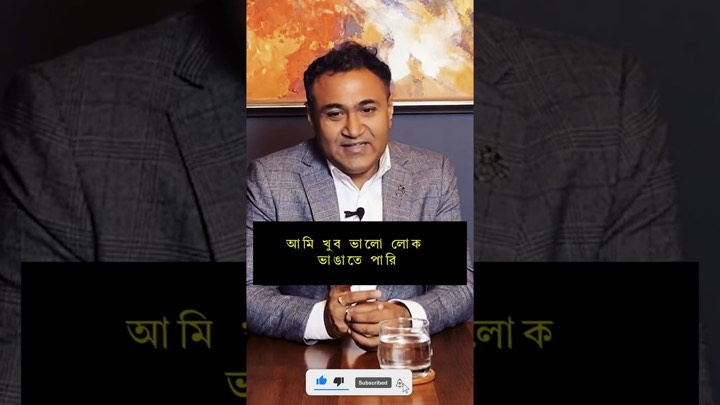
Debaditya is an unusual guest for a business podcast. He co-founded the Bengali rock band Lakkhichhara and still plays keyboards for it; he also built Chowman, Oudh 1590 and Chapter 2. Host Barun wonders whether to treat him as an entrepreneur or an artist, and Debaditya wants to talk about both: how to do ব্যবসা, how to do গানবাজনা, and how to earn a living without giving up what makes you happy.
A Lakkhichhara mindset before the band existed
He grew up in an ordinary family in Ballygunge, South Kolkata. Nobody had ever run a business; everyone was salaried, in government, bureaucracy or corporate jobs, and his father worked abroad. Nobody thought music could be a livelihood either. His own temperament, he says, was contrary from the start.
"যদি সবাই ডানদিকে হাঁটতো আমি বাঁদিকে হাঁটতাম। সবাই যখন পড়ছে তখন আমি ঘুমাতাম, সবাই যখন ঘুমাচ্ছে তখন আমি পড়তাম।"
Debaditya Chaudhury
If everyone walked right, he walked left; when everyone studied, he slept. The easy road, he argues, is pleasant but does not go far; the path that looks like jungle and mountain is the one worth walking.
The music came first. He learned piano, played in neighbourhood bands while at South Point, and in class eleven at St Xavier's met Gaurab Chatterjee (Gabu) and Sanket Bhattacharya (Panku). The name Lakkhichhara came with the blessings of Gautam Chattopadhyay. The band properly formed in 1999 with Sayak, Gabu, Panku and Nilanjan; their first album was out while they were still in class twelve, which meant telling parents they were off to Bardhaman at night for a show. The second album, released by Asha Audio around 2001, was the turning point: one song became enormously popular and the goods train, as he puts it, turned into a superfast engine.
From two biryanis at a sitting to a radio show
Alongside the music was an appetite. He never ate one biryani in his life, always two, sometimes three. His mother cooked constantly and he became, in his own words, severely obese.
When Friends FM launched, a friend who was a popular RJ there, Nilanjana, suggested they host a show together: "খেতে খেতে শোনো", Thursdays from six to seven, about the food he found on his travels in India and abroad. Never five-star places, which he could not afford anyway, but small neighbourhood eateries with extraordinary food. The show became popular enough to force him to take food seriously.
He was working at a public relations agency then, and for two or three years before Chowman the job took him to China two or three times a year. He decided to open a restaurant with very little money. The question was what kind.
Democratising fine dining: the Chowman idea
Kolkata in 2010 already had Chinese food everywhere, in Tangra, on Park Street, across the city. Why another one? Debaditya's answer is borrowed from the founder of Ford, who spoke of democratising the automobile: a small car a middle-class family could afford, and a premium car too.
"আমি যেটা ঠিক করলাম সেটা হচ্ছে democratising fine dining।"
Debaditya Chaudhury
Everyone wants to go to a fine-dining restaurant, he argues, but many families cannot, partly for money and partly, especially among middle-class Bengalis, out of anxiety: what to wear, how to sit, how to eat without being judged. Chowman was built to break that: ambience, food, crockery and cutlery at par with any five-star place, at a reasonable price. He brought recipes back from China and started importing the sauces. The first advertisement said "Five star food at one star cost".
The first Chowman on Golf Club Road was 300 sq ft. With no publicity budget, within a month and a half he could not seat the people queueing outside. His explanation is that content is king: advertise a film all you like, if it is bad it will not run. Packaging carried the concept too. Chowman has sent chopsticks with every order since 2010, with instructions on the pack, at a time when Kolkata households kept chopsticks as ornaments; he claims at least one percent of the credit for making them popular.
Oudh 1590: Bengalis selling biryani
In 2013 Debaditya and his elder brother, who ran a communications business, decided to start something together. They chose biryani and kebab, and the reaction was that people could not accept Bengalis entering a trade that four or five old shops around Park Circus dominated so completely that biryani in Kolkata meant those names alone.
So they went to Lucknow, researched, and launched galouti kebab in Kolkata, along with biryani served in a হাঁড়ি. He says Oudh 1590 was the first to bring both to the city, that others have since copied the handi, and that the brand has overtaken shops with 100 or 150 years of history on Swiggy and Zomato figures. There are 14 Oudh outlets in Kolkata plus a presence in Delhi.
Barun adds that a member of his own crew who does not eat biryani was pushed by friends at a party to try Oudh's. Word of mouth, Barun says, is the real business, and Debaditya agrees: hoardings and TV cannot make someone order a second time if they did not like the first plate. His proudest figure is that 80 percent of customers are repeat customers, with 20 percent new customers added every month.
Chapter 2: the Park Street of his childhood
Every restaurant, Debaditya says, has a story behind it, and Chapter 2 is the most personal. As a child he went to Park Street with his family only on occasions: lunch after Durga Puja shopping, a visit before Christmas with his father or jethu. Park Street then meant continental food and live bands; he names Sky Room, an iconic restaurant that later closed. That Park Street, he says, was chapter one. Chapter 2 replicates it: the same continental food, the same feel, a live band every day, partly because live music is fading and he wanted a place where musicians could play every day.
The group now operates in Kolkata, Delhi, Hyderabad and Bangalore, with Mumbai and Chennai next; Debaditya says the plan is an IPO within two or three years. He claims Chowman is among the top three restaurants nationally in Swiggy and Zomato delivery revenue.
300 square feet, one lakh square feet of confidence
Barun opened by asking for the most exciting moment of the journey that he has never told in public. Debaditya comes back to it later, calling it Chowman's funniest and most important moment, and it is the one that gives the episode its tagline.
"আমার restaurant এর size ছিল 300 sq ft, তার kitchen টার size ছিল 100 sq ft, আর আমার confidence টা ছিল 1 লাখ sq ft এর।"
Debaditya Chaudhury
He borrows a Shah Rukh Khan anecdote: Khan's contemporaries were taller and better looking, and he stood before a mirror every day saying "I am the best" until he became it. Debaditya did the same: করবই, করবই, করবই. Many cooks he recruited saw the premises and ran away the next day. Those who stayed from day one are still there.
Employees first, then the company, then me
The clearest statement of how he runs the company comes when Barun asks about COVID. Restaurants shut overnight in March 2020. Debaditya went personally to the then Chief Secretary of West Bengal, gave a presentation arguing that elderly people and families depended on restaurant food, and within three days delivery was allowed as an essential service.
Around 60 percent of restaurants, he says, began closing, and owners told employees there was no work, no pay, no healthcare, come back when we reopen. That was the one thing he could not do.
"I am an employee's person. আমি প্রথমে দেখি ওদের benefit টা, তারপর organisation এর benefit, তারপর আমারটা। আমারটা last।"
Debaditya Chaudhury
Salaries were paid on time every month, bonuses were given, and Chowman hired large numbers of people other restaurants had let go. In the lockdown phase the group opened at least 12 new restaurants, including its first in Bangalore, while everyone advised against it. The Chowman app, launched shortly before, now has, by his count, five lakh users ordering directly. "Chowmein is an emotion," he says: freshly cooked food will sometimes have too much salt or soy, customers will call and shout, and the next day they order again.
If someone asks what his biggest asset is, he says, he would not name a house or a car but his employees. Walk into any Chowman, he tells listeners, insult him to any gatekeeper, chef or manager, and if that person tolerates it rather than showing the customer out, he will lock that restaurant the next day.
This is also his answer to Barun's question about how retention stays so high when complaints are inevitable. Formula one is employee retention: attrition in the industry is so high that people leave for 500 rupees more, but at Chowman almost nobody leaves, because the place runs like a family. Barun, who ran his own restaurant in Durgapur before it closed (the story is in the Adda Khana episode), says he relates completely.
The failure, and the discipline
Barun points out that every interview makes the journey sound smooth, which cannot be true; most entrepreneurs, he says, fail two or three starts first, and the money, energy and time spent are investment rather than waste. Debaditya concedes one or two small casualties, chiefly Master Dimsum, a quick-service chain selling momos and dim sum, which did not work and was closed. He counts it as an experiment and an experience, not a failure.
His two qualities, he says, are extreme courage and a slightly extra "chip" for business. But the closing minutes are about discipline. He is out of Kolkata four days a week and, when home, drops his daughter at school every morning, walks his dog Sushi, goes to the gym, and never works after 7 pm. He wakes at five, reaches the office by 8:30 or 9, and is asleep by ten. No tea, coffee, cigarettes or alcohol, no parties. He never misses a Lakkhichhara show, and during Durga Puja, the peak season, he tours with the band, this year 21 days in the US, while the team runs the business. The 7 pm rule, he admits, did not exist while the team was being built. Now decisions are taken collectively; he calls it a democratic company.
Who is Debaditya Chaudhury
Debaditya Chaudhury is the founder of Chowman, the Chinese restaurant chain he started in 2010 in a 300 sq ft space on Golf Club Road, Kolkata, and of Oudh 1590 (2013, with his brother) and Chapter 2. As of this episode the group runs 51 restaurants in Kolkata, Delhi, Hyderabad and Bangalore, employs two to three thousand people, and is preparing to enter Mumbai and Chennai. He co-founded Lakkhichhara in 1999 with school friends Gaurab Chatterjee and Sanket Bhattacharya and remains its keyboardist. Before Chowman he worked at a PR agency and co-hosted "খেতে খেতে শোনো" on Friends FM.
Why this conversation matters
The Deep Down Show has asked more than once why Bengalis hesitate to do business; Subhashis Dutt's umbrella episode tackles the question head on. Debaditya is the counter-example: a boy from a salaried Ballygunge family, told that Bengalis do not sell biryani, who built one of Kolkata's biggest restaurant groups without abandoning the band he formed in class eleven. Like Pallab Ghosh in the Gappu instruments episode, he turned a passion into an industry rather than choosing between them.
The practical lessons are specific: keep the food the hero, keep the price honest, and treat staff retention as the first lever of customer retention. The Lakkhichhara half of his life was promised for a second episode. Shorter cuts from this one are on the DDS Clips channel.
Frequently asked questions
How did Chowman start?
Debaditya Chaudhury opened the first Chowman in 2010 on Golf Club Road in Kolkata: a 300 sq ft restaurant with a 100 sq ft kitchen. He was working at a PR agency and had been travelling to China two or three times a year, bringing back recipes and importing sauces. The idea was 'five star food at one star cost'. Without any publicity budget, the restaurant had queues within a month and a half.
What is the idea behind Oudh 1590?
In 2013 Debaditya and his elder brother decided to enter the biryani and kebab business, which in Kolkata was dominated by four or five old shops around Park Circus. People could not accept Bengalis selling biryani, so the brothers went to Lucknow, did their research and launched galouti kebab and biryani served in a handi. He says Oudh 1590 now has 14 outlets in Kolkata and is present in Delhi.
What is Chapter 2 and why does it have live music?
Chapter 2 is what Debaditya calls retro dining, modelled on the Park Street of his childhood, when families went there after Durga Puja shopping or before Christmas for continental food and live bands at places like the now-closed Sky Room. That Park Street was 'chapter one'; Chapter 2 recreates it with continental food and a live band every day, partly so working musicians have somewhere to play as live music fades.
How did Chowman survive the COVID lockdown?
When restaurants shut overnight in March 2020, Debaditya personally presented his case to the then Chief Secretary of West Bengal and, within three days, restaurant delivery was allowed as an essential service. While he says around 60 percent of restaurants began closing and sending staff home unpaid, Chowman paid salaries on time every month, gave bonuses, hired people other restaurants had let go and opened at least 12 new restaurants, including its first in Bangalore; the Chowman app had been launched shortly before.
How does Chowman get so many repeat customers?
Debaditya says 80 percent of Chowman's customers are repeat customers, with 20 percent new customers added every month. His first formula is employee retention: attrition in the restaurant industry is very high, but at Chowman people rarely leave because the company is run like a family. Earlier in the episode he also says the food is the 'content' and the hero: advertising cannot save a restaurant whose food people do not want a second time.
Has Debaditya Chaudhury ever had a business fail?
Yes. Alongside the brands people know, he built Master Dimsum, a quick-service chain selling momos and dim sum. It did not take off and was closed, and he admits one or two small things like that have failed. He says he does not see them as failures but as experiments and experience he carried forward. Barun, framing the question, says money, energy and time spent on a failed start are investment, not waste.
How was the band Lakkhichhara formed?
Debaditya learned piano and played in neighbourhood bands and school fests while at South Point. In class eleven at St Xavier's he met Gaurab Chatterjee (Gabu) and Sanket Bhattacharya (Panku). The band's name came with the blessings of Gautam Chattopadhyay, and Lakkhichhara properly formed in 1999. Their first album came out while they were still in class twelve, and a 2001 album was the turning point that multiplied their shows and fame.