Manjima Mukherjee is the founder of the commercial photography studio Flashback Globale and co-founder of Atlantaa, a 360° brand-building agency, both run out of Kolkata. In the 11th episode of Deep Down Show, host Barun Kumar Choudhury sits down with her at Atlantaa's office to talk about how a schoolgirl who once shot Saraswati Puja on a reel camera ended up building two ventures — and why she still thinks the hardest part of the job is understanding what a client actually needs, not what they say they want.
The conversation moves between the practical and the personal: how to name a brand so it doesn't sound stuck in one city, whether AI is coming for creative jobs, what to do when a client can't pay full price, and how to stop two business partners from wrecking a company they built together. Mukherjee answers most of it the same way — by going back to a specific moment from her own career, whether it's a ₹1,500 cup of tea in Mumbai or a relative asking her father why he "wasted" money on her education.
From a Reel Camera to Flashback Globale
Mukherjee's photography habit started in school — Saraswati Puja, school excursions, class functions — shooting on a reel camera and getting the film developed into albums. She kept it going through college by taking the morning shift for her classes, which freed up her afternoons to shoot. By the time she was choosing what to study next, she had more or less already decided: move to Mumbai, where she had family, and study commercial photography seriously.
She joined the International Institute of Photography in Mumbai as part of its second-ever batch, completing a two-year advanced diploma in commercial photography. What she says the course actually taught her wasn't a technical skill so much as a mindset — that literally anything can be photographed commercially: shoes, food, a suitcase, a coffee mug. After the diploma, she spent about two and a half to three months working on projects with Anandabazar Patrika and shot a couple of weddings before starting her own venture. That venture became Flashback Globale, her commercial photography studio, which she says later won a "Young Entrepreneur of the Year" award.
Why "Atlantaa"
When Mukherjee and her business partner set out to build a brand-building agency alongside the photography studio, the name mattered as much as the service. She says the word has a Sanskrit root that she and her partner deliberately twisted into an English-sounding name — partly a nod to family, partly a decision not to sound tied to one city. They didn't want a name that read as Kolkata-only; the plan from the start was to work with clients beyond Kolkata, Delhi and Mumbai, and a name that traveled well was part of that plan.
From Photography to Brand Building
Mukherjee says the shift from photography to branding wasn't a separate career move so much as a natural next step. Working on commercial shoots, she kept running into clients who had good photos but no real branding behind them — no thought put into what those photos should say about the business. People above her early on would tell her that a certain kind of picture wouldn't work "for branding," and she started paying attention to why. Her conclusion: a business doing well isn't the same as a business that's built to scale. Photos and posts are inputs; a brand is a decision about what a business stands for, and that decision has to come from the client and the people advising them — not from a tool that can only generate the visuals.
Can AI Replace Us?
Asked directly whether AI threatens her business, Mukherjee doesn't dismiss it, but she doesn't panic either. She points out that writing a full article herself might take her a day; AI can draft the same thing in minutes. Her answer isn't to avoid the technology — it's to use it and train her team to use it, rather than let it replace them by default. She describes teaching her own employees AI tools so they could take on more client work than they could manage on their own, rather than treating each new AI capability as a threat to headcount.
What she says AI still can't do is read a client. She frames her own value as knowing the client's pain point — something no automated tool hands you.
Feel, Deal, Heal
Mukherjee's client philosophy is summed up in three words she repeats through the episode: feel the client's situation, deal with the project accordingly, and the situation gets healed. She talks about clients who came to her with a hard personal story behind the job — she doesn't name them, but describes weighing a client's real circumstances, not just their budget, when deciding how to price or scope a project. Money and time matter, she says, but so does the satisfaction of doing right by someone going through something difficult, and that decision has its own value beyond what shows up on an invoice.
She illustrates the idea that value is built, not just charged for, with two stories. The first is about sweets in Kolkata: a friend told her people will drive to a specific named shop for mishti even when a lesser-known shop nearby makes something just as good — because the name itself carries value. The second is her own experience at a Mumbai hotel, where she was served tea in a small clay cup (kulhad) that cost roughly ₹1,500 — a price that had nothing to do with the clay or the tea leaves and everything to do with the brand around it. Her point to founders: figure out who you want your product's value to reach before you compete only on price.
She traces that same idea back to how she started out, with no capital behind her:
"I had zero money... I didn't take any investment from anyone, no monetary investment. What I had was brain investment."
USP: Uniqueness, Straightforwardness, Punctuality
Mukherjee's own answer to "what's your USP" is three words: Uniqueness, Straightforwardness, Punctuality. She pushes back, though, on the idea that straightforwardness gives anyone license to be harsh. She says there's a thin line between the two, and that being clear with a client — telling them plainly what you can and can't do — is not the same as being rude to them. Being straightforward, in her framing, means a client always knows exactly where they stand with you; being rude is a failure of the same skill, not a version of it.
Partnerships Without Clashes
On keeping a co-founder relationship from falling apart, Mukherjee's advice centers on managing expectations and giving each partner space to work where they're strongest, rather than both partners trying to control every decision. She uses a homely image to make the point: put a watermelon too big for a small juicer into the machine, and the juicer won't turn properly — it needs room to actually work. Partnerships function the same way, she says: merge what each person is good at, but let each one keep their own space rather than crowding into the other's.
Family, Career Choices and Self-Belief
Some of the most specific moments in the episode are about the pressure Mukherjee faced choosing photography as a career. She recalls relatives questioning her father directly — asking why he spent money on her education only to let his daughter "waste" it on photography instead of medicine or engineering. She says she considers herself lucky that her family, in the end, let her pursue what made her happy rather than what looked safest on paper.
That experience feeds into a broader philosophy she returns to more than once: that a situation is defined less by what happens to you than by how you respond to it. She also describes a personal habit of starting each morning thinking about her own wellbeing rather than worrying about other people's opinions — including strangers' comments about her podcast or social media presence, which she says she has learned not to take as either validation or insult.
From Businessman to Artist
Toward the end of the conversation, Mukherjee talks about failure as part of the process rather than something to avoid. She describes losing tenders, having projects fail, and treating each loss as something to learn from rather than hide. Her framing is that repeatedly building, failing and rebuilding is what turns a "businessman" into something closer to an artist — someone whose work carries a point of view, rather than a business chasing success and money alone. She points to Shah Rukh Khan as an example that even people who reach the top have gone through rough stretches before getting there.
Who is Manjima Mukherjee
Manjima Mukherjee is the founder of Flashback Globale, a commercial photography studio she started after training at the International Institute of Photography in Mumbai, and co-founder of Atlantaa, a 360° brand-building agency based in Kolkata. Her photography work reportedly won a "Young Entrepreneur of the Year" award, and she now splits her time between commercial shoots and advising clients on branding and business strategy.
Why This Conversation Matters
For anyone in Bengal thinking about starting a creative business, Mukherjee's episode is less about photography technique and more about the harder, less visible work: reading what a client actually needs, deciding what a brand is worth beyond its raw materials, and holding a partnership together without either person taking over. Her insistence that AI is a tool to train people on, not a threat to hide from, and her family's early skepticism about her career choice, both speak to a wider question this show keeps returning to — what it actually takes for a Bengali entrepreneur to build something that isn't limited by where it started.
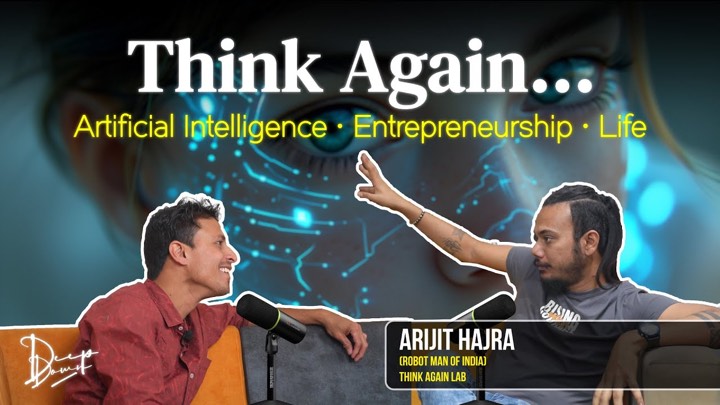
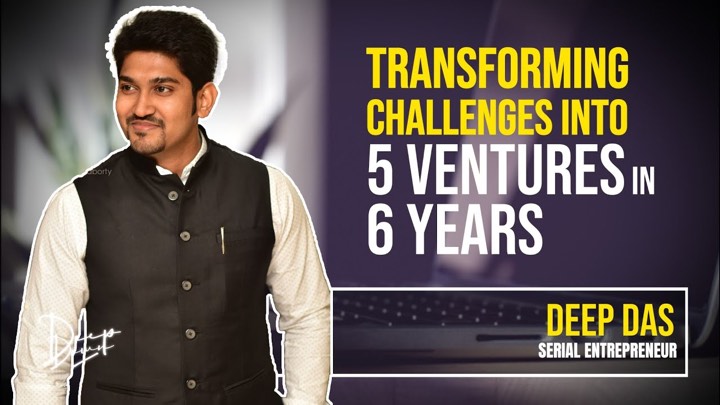
For more on how Bengali founders are rethinking AI and business, see Arijit Hajra on AI, Business and India's Education and Deep Das's rags-to-riches story. For the cultural backdrop to why entrepreneurship is still an uphill choice for many Bengali families, see Why Bengalis Don't Do Business.
Frequently asked questions
Who is Manjima Mukherjee?
She is the founder of Flashback Globale, a commercial photography studio, and co-founder of Atlantaa, a 360° brand-building agency. She trained at the International Institute of Photography in Mumbai before starting her own ventures in Kolkata.
What does Atlantaa, Manjima Mukherjee's agency, do?
Atlantaa is a 360° brand-building venture she co-founded after Flashback Globale. In the episode she explains the name deliberately mixes a Sanskrit root with an English twist, because she and her partners wanted a name that could travel beyond a Kolkata-only identity.
Can AI replace commercial photographers and brand consultants, according to Manjima Mukherjee?
No, she argues. AI can speed up drafting content — turning a day's writing into minutes — but it cannot replace reading a client's actual pain point or building trust with them. Her answer to AI was to train her own employees on it rather than treat it as a threat.
What is Manjima Mukherjee's 'Feel-Deal-Heal' mantra?
It's her framework for client work: feel the client's real situation, deal with the project according to that situation, and the underlying problem gets healed. She illustrates it with clients whose personal circumstances shaped how she priced or scoped a job.
What is her advice for business partners who keep clashing?
Manage expectations and give each other space to work in the area each partner is strongest at, rather than both trying to control everything. She compares it to forcing an oversized watermelon into a small juicer — it needs room to actually turn.
How did her family react to her choosing photography as a career?
She recalls relatives questioning her father for spending money on her education, asking why he let his daughter do photography instead of pursuing something like medicine or engineering. She says she was fortunate that her family ultimately let her follow what made her happy.
What is Manjima Mukherjee's USP framework for branding?
She sums it up as Uniqueness, Straightforwardness and Punctuality, but is careful to separate straightforwardness from rudeness — she says there is a thin line between the two and that being clear with clients should never tip into being harsh.