At midnight in 1995, in a tea-garden village in Jalpaiguri, Karimul Haque's mother had a heart attack. There was no ambulance. The one man in the village with a car wanted to help, but his wife refused, afraid the car would be spoiled if the woman died on the road. At four in the morning his mother died at home. "সেদিন থেকে আমি শপথ নিয়েছিলাম... আমি গ্রামের কাউকে মরতে দিব না বিনা ট্রিটমেন্টে," he tells Barun. From that day he swore that no one in his village would die without treatment.
Thirteen years later that oath became a motorcycle with an ambulance board tied to it. Today Karimul Haque is a Padma Shri, has appeared on Kaun Banega Crorepati, and is the subject of a Bangla feature film with Dev in the lead. In episode 25 of the Deep Down Show, the বাংলা পডকাস্ট hosted by Barun, he tells the story in his own words: the loan for the first bike, the Prime Minister's phone call he hung up on, the hospital built with donations, and the bridge over the Chel river that no politician will build. He cannot read or write, yet much of the episode is sharp, rhymed advice about parents, marriage, phones and helmets.
The night without a car, and the bike bought on instalments
Karimul describes himself first as চা বাগানের শ্রমিক, a tea-garden labourer. The idea came in 2007, when a colleague fainted in the garden. Karimul borrowed the manager's motorcycle, tied the friend to his back with a gamchha and rode 40 km to Jalpaiguri hospital. The friend came home four days later, and Karimul's brain "started playing" with a thought: if a motorcycle could be an ambulance, people could be served.
In 2008 he went to a dealer, Anupam Banik, who asked what a tea-garden worker would do with a motorcycle. The TVS Star City cost Rs 65,000, available on loan against a cash deposit and a salaried guarantor. Karimul borrowed the deposit from relatives in sums of one and two thousand rupees and persuaded a school teacher, Chittaranjan Pal, to stand guarantee.
He earned Rs 4,000 a month; the instalment was Rs 1,100. The night the bike came home he fixed boards front and back reading "Bike Ambulance Dada", the name that has stuck ever since. Then he made a deal with his wife: if his mother had been alive they would have spent money on her saris and food, so Rs 500 a month, his mother's share, would go into the petrol tank, and he would carry people for free.
তোমার মা আমারও মা। তুমি পরিসেবা দিতে পারো। সংসারে একটু কষ্ট হলেই হতে পারে।
Karimul's wife, as he recalls it
"Your mother is my mother too," she told him. "You can serve people. If the household suffers a little, so be it."
The woman who laughed, and the snake that bit her the same night
The next morning Karimul rode to a shop beside the main road. The woman who ran it read the board and burst out laughing: how could a bike be an ambulance?
That same night, around nine, she went out to the fields, since the village had no latrines, and was bitten by a snake. Her husband came running. Karimul sat her in the middle, put the husband behind her with orders to keep her talking so she would not fall asleep, and reached Jalpaiguri at eleven. Four or five days later she came to his house. "দাদা, সেদিন আমি হাসছি, আজকে এটা আমার জান বাঁচিয়েছে," she said. She had laughed at it, and it had saved her life.
Within two or three months the bike was known. Traffic police gave him Rs 100 or 200 for food; an inspector-in-charge in Jalpaiguri gave him Rs 1,000 a month; nurses and the post-mortem room sweepers slipped him small notes, which he saved. His routes ran to Jalpaiguri, Siliguri, Malbazar and Odlabari, carrying everyone except pregnant women, who cannot safely ride pillion. His manager told him to leave work whenever a patient needed him.
Hanging up on the Prime Minister
The Padma Shri story is told as a comedy. Karimul was working in the tea garden when a caller asked whether this was Bike Ambulance Dada of Jalpaiguri, and then said, "Main Modi." Karimul told him to stop wasting his time and cut the call. The exchange, he says, was later mentioned in Parliament and is on YouTube.
An SDO later brought a paper about a big award he did not understand. A week before Delhi, a home ministry official called; that morning his mentor Dr Khiten Barman had died in a car accident, and Karimul, assuming another prank, hung up again. Only when the evening television was full of the news did he grasp that a national award was coming; nobody in the village had heard the name before.
He received the award from President Pranab Mukherjee on 30 March 2017. In 2012 the 24 Ghanta channel had given him its Ananya Samman; he has been on Dadagiri twice, and has since been recognised from Korea, German TV and Al Jazeera.
"আপনার নাম তো পল্টু বাবু": Pranab, Modi, Kohli and three service chiefs
In Delhi, Karimul says, he and Pranab Mukherjee were the only two Bengalis in the room, so they spoke Bangla. Karimul opened with "আপনার নাম তো পল্টু বাবু" — your name is Poltu Babu. The President asked who had told him; Karimul said his didi called him that. Over tea, Pranab told him he felt blessed to give a Padma Shri to a Bengali with only three months of his term left.
At the Republic Day reception, Karimul, with a phone his son had just bought him, was busy taking pictures when the guests lined up. He squeezed in near the Prime Minister; Modi, he says, hugged him, called out "Arre Karim", and took selfies, and three service chiefs then followed him around until he got into his car. He stood eating pakoras with Virat Kohli and told Rajnath Singh about the health of North Bengal's tea-garden workers. On KBC he teased Amitabh Bachchan about his prison scenes in Dostana. But the stage, he insists, is not the point: "যাওয়াটা বড় জিনিস না, কাজটা সবচেয়ে বড়" — going there is not the big thing, the work is.
What the donations built
Barun points out that most people who receive donations build themselves a house. Karimul says he has not. "আমি ওই পয়সা দিয়ে বাড়িতে একটা দুই কোটি টাকা দামের হসপিটাল তৈরি করছি," he says: with that money he has built a hospital worth about Rs 2 crore near his home, plus a guest house for visiting doctors. The ground floor runs as a day-care and first-treatment centre with doctors on video call; serious cases go on in one of his ambulances. The upper floor is unfinished and he still needs an X-ray and a sonography machine. The fleet is three bike ambulances, which he still rides at nearly sixty, and two donated four-wheel ambulances driven by his sons. Four other bike ambulances have started in the region after seeing his, and one runs in Purnea, Bihar, in his name.
Because he could not answer the English-language calls that came from abroad after the award, he started schools so tea-garden children would not share his regret. He oversees four primary schools whose teachers are paid by donors in Delhi and Mumbai, collects wheelchairs and tricycles for the disabled, carries winter clothes to closed tea gardens, feeds the elderly, and with a young Hindu woman he calls his daughter has given about 40 women work making crochet bags. He brings cancer patients from his area to NRS hospital in Kolkata.
During Covid he and his son carried bodies, sanitised houses in PPE kits and broke open locks a village head had put on infected families' homes so the children inside could be fed. After floods from Bhutan, Iqbal Hasan Kazi, a man from Bagnan working in Kuwait, sent Rs 6 lakh that became rice and relief supplies, and Karimul rebuilt a washed-away temple near Dhupguri. He gives away forty or fifty Gitas a year and, as a Muslim, inaugurates 25 to 30 Durga Pujas.
Politics, the Chel river bridge and the state of North Bengal
Barun asks the obvious question: with this reach, why not become a political leader? Karimul answers first with a Hindi song line about being neither Hindu nor Muslim but human, and then with a plain reason.
আমি লেখাপড়াই জানি না... ভয় লাগে। এখানে সই করুন — আপনি পড়তেই তো পারব না।
Karimul Haque
He cannot read, so he fears being told to sign something he cannot read. He has a pacemaker and does not trust even his own body; he trusts only what he sees with his eyes, and politics is what you hear with your ears. Some who enter it, he argues, come to loot rather than build, and he would rather stay on everyone's side.
His frustration is concrete. Near his home is the Chel river. Without a bridge, a patient must go 40 km round through 10 km of forest, where elephants sometimes block the road, to reach Jalpaiguri hospital; with a bridge it would be 15 km. Leaders from the Centre and the state, he says, put a hand on the bridge-head and swear to build it, collect the votes and vanish. The area has a BJP MP and a Trinamool minister, and still no bridge, despite his repeated campaigns.
On the tea gardens he is blunt. Many are closed and wages are low. Each family gets one job, so grown sons leave as migrant labour and some do not come back. Women in the gardens have haemoglobin around six and get no vitamins after childbirth. Resorts in Lataguri are owned by Kolkata people, so tourist money goes back to Kolkata while villages next door stay poor. Leopards take goats and attack cyclists; elephants and snakes are daily risks. "উত্তরবঙ্গে কি নেই?" he asks — tea, coal, dolomite, forests — "কিন্তু আমরা রান্নাটা করে খাইতে পারি না." North Bengal has everything, but cannot cook it into a meal.
Serve your parents first, choose character over looks, marry on time
Much of the second hour is Karimul's advice, delivered in rhymes and proverbs. Money left at a tree root or a shrine cannot be spent by the dead, he says, while the living woman with a child at your car window gets nothing. "মরলে কিন্তু জাতের বিচার হবে না, আত্মার বিচার হবে" — when you die, your caste will not be judged, your soul will. Serve your parents first, then go to the mosque, temple or church. A mother can carry four children, but four sons cannot keep one mother. His formula for life is "পরিশ্রমে ধন আনে, অলসে দুখ; পাপে রোগ আনে, পুণ্যে সুখ": hard work brings wealth and laziness sorrow, sin brings disease and virtue happiness. Health and education, not rifles, are your real bodyguards.
On marriage he tells Barun to look at গুণ, not রূপ: skin changes, character stays, and the test is whether your parents can get a cup of tea from your daughter-in-law. Marry on time rather than after every achievement, he argues, because a man who builds something needs someone to carry it forward; he has already married off his son so the hospital has a caretaker after him.
He refuses to leave money for his sons, who he says have no complaint. He wants to be known as "রাজেশের বাবা", Rajesh's father, rather than Rajesh being known as Karimul's son. A boy polishes the Rs 300 shoes he bought himself and neglects the Rs 500 pair his father gave him; what you earn, you care for. The same instinct drives his complaints about young men wasting their mothers' sacrifice on liquor and ganja, and about "দেশি মুরগি, বিলাতি ভাষা" — Bengali children calling every pishima and kakima "aunty". He asks every mother and sister to hand over a helmet before a bike leaves the house, and describes his own road rule: hooter on, stop at red lights, keep a cool head however much the patient's family shouts, and watch for animals in the forest.
Irrfan, then Dev: the Bike Ambulance Dada film
A Bollywood biopic came first: the agreement was signed, Irrfan Khan was to play him and Karim Morani was producer, but delays dragged on, and after Irrfan's death Karimul asked for the rights back. His director then contacted Dev. The film has been shot in full, mostly in North Bengal, in the hospitals Karimul actually worked with and on his original bike.
Why Dev? Karimul says the actor is humble and without pride, that he pinched his cheeks like a son, and that Dev visited him in hospital recently; if the film does well, there is talk of a part two. Asked whether famous people make him hesitant, he answers that a big person is one with a big heart, not five cars or a ten-storey building.
His plan for the future is bike ambulances across Bengal and India, since not every emergency needs a four-wheeler and a bike can reach a narrow lane; anyone with a bike could give an hour or two a day to take a patient to a doctor. "আবেগ আর বিবেক যতক্ষণ চাবে না ততক্ষণ কোন কাজ হবে না," he says: nothing happens until emotion and conscience are switched on. To reach him or donate, he gives his phone number on air, which is also his PhonePe: +91 9832571833.
Who is Karimul Haque
Karimul Haque grew up in severe poverty in a tea-garden family in Jalpaiguri district, sleeping on jute sacks and eating boiled jackfruit, and never learned to read or write. His mother died of a heart attack in 1995 for lack of transport. A tea-garden labourer, he borrowed a manager's motorcycle to save a colleague in 2007 and in 2008 bought his own bike, becoming the Bike Ambulance Dada who carries patients free of charge across Jalpaiguri, Siliguri, Malbazar and Odlabari.
He received the Padma Shri from President Pranab Mukherjee on 30 March 2017 and has appeared on KBC, Dadagiri and the Bada Bharat Show. With donations he has built a hospital near his home, runs three bike and two four-wheel ambulances with his sons, oversees four primary schools and employs about 40 women. He still sleeps in his wooden house and wears donated clothes. Barun first met him at Techno India around 2018–19 and had tried to record this episode since late 2023.
Why this conversation matters
Karimul is the first Deep Down Show guest whose institution is a motorcycle bought on a Rs 1,100 instalment. The episode is a case study in how one person without money, literacy or connections built a health service where the state has not reached, and how recognition followed the work rather than the other way round. It also records problems that rarely reach Kolkata: the missing Chel river bridge, the one-job-per-family arithmetic of tea gardens, anaemic mothers, migrant sons and resort money that leaves the district.
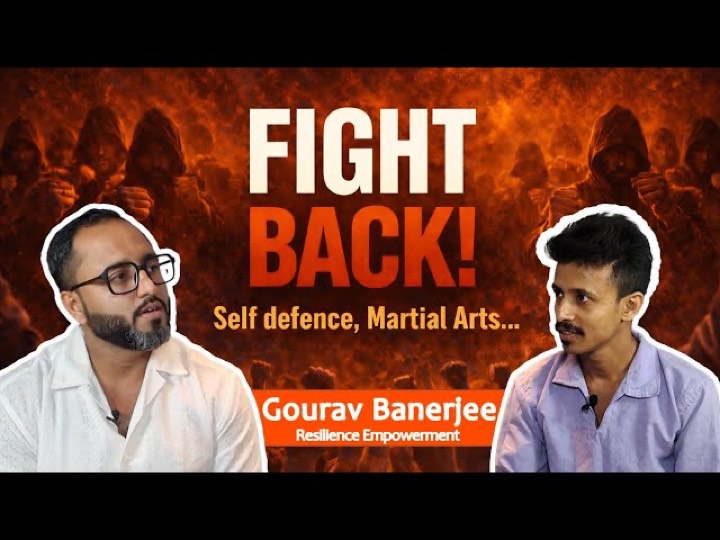
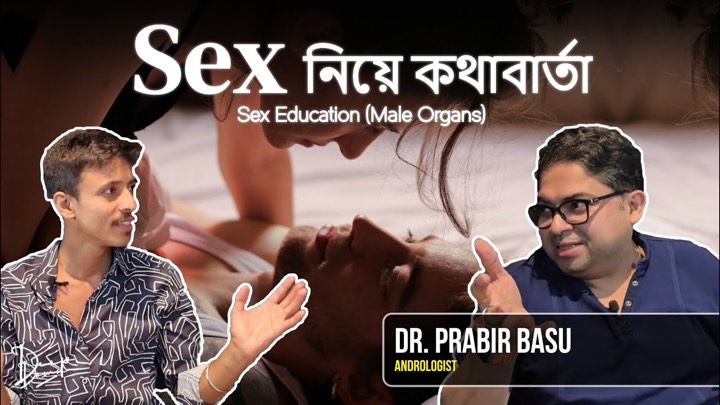
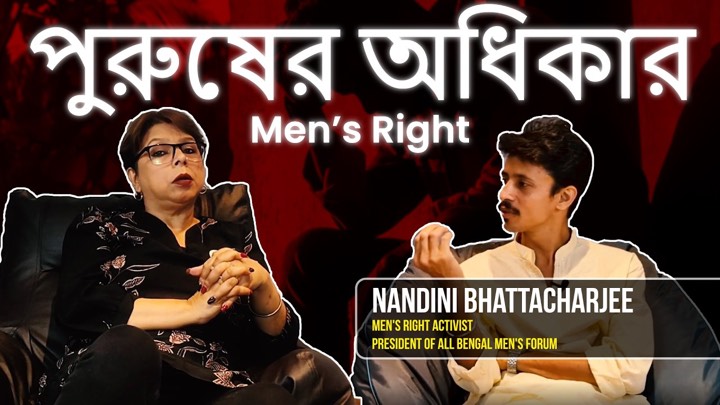
Readers who want the practical side of staying safe can pair this with Gourav Banerjee's episode on self-defence at /episodes/self-defence-martial-arts-gourav-banerjee/. Karimul's insistence that health is your bodyguard sits alongside Dr Prabir Basu's conversation on men's health at /episodes/mens-sexual-health-dr-prabir-basu/, and his views on marrying for character make a contrast with Nandini Bhattacharjee's discussion of marriage law at /episodes/mens-rights-nandini-bhattacharjee-marriage-law/.
Frequently asked questions
Who is Karimul Haque, the Bike Ambulance Dada?
Karimul Haque is a former tea-garden worker from Jalpaiguri district in North Bengal who turned his motorcycle into a free ambulance in 2008 after his mother died without treatment. He received the Padma Shri from President Pranab Mukherjee in 2017 and, according to the episode description, has helped nearly 7,000 people reach hospital.
How did the bike ambulance start?
In 2007 a colleague collapsed in the tea garden, so Karimul borrowed the manager's motorcycle, tied his friend to his back with a gamchha and rode 40 km to Jalpaiguri hospital. That gave him the idea; in 2008 he bought a TVS Star City on instalments and fixed 'Bike Ambulance Dada' boards on it the same night.
What happened when Narendra Modi phoned Karimul about the Padma Shri?
Karimul was working in the tea garden when the caller said he was Modi and that he would get the Padma Shri in Delhi. Thinking it was a prank, he told the caller to stop wasting his time and cut the call. He says the incident was later mentioned in Parliament and is on YouTube.
What has Karimul built with the donations he receives?
He says he has not spent donations on his own house. Instead he has built a hospital near his home, which runs a day-care and first-treatment service with doctors on video call, plus a guest house for doctors. He also oversees four primary schools funded by donors, distributes wheelchairs and winter clothes, and employs about 40 women making crochet bags.
Which film is being made on Karimul Haque?
A Bollywood biopic with Irrfan Khan was agreed first, but it stalled and Karimul took the rights back. The Bangla film 'Bike Ambulance Dada' starring Dev has now been shot, largely in North Bengal, in the hospitals Karimul actually served and on his original motorcycle.
Why does Karimul Haque refuse to join politics?
He says every party invites him, but he cannot read or write, so he would not be able to read a paper before signing it. He also says he has a pacemaker and does not fully trust his own body. He prefers to stay on the side of everyone, and sings a Hindi line about being neither Hindu nor Muslim but a human being.
How can people support Karimul Haque's work?
In the episode he gives his own phone number, which is also his PhonePe number, listed in the video description as +91 9832571833. He says the money goes to fuel for the ambulances, medicines for poor patients and food for the elderly and disabled people he looks after.