When Barun told a friend he was about to shoot an episode on men's rights, the reply was a question: "পুরুষদের আবার অধিকারও হয় নাকি?" Do men even have rights? He opens episode 24 of Deep Down Show with that line, and later puts the same question to friends on a WhatsApp story. Some joke; a few write exactly the same words back.
His guest has been doing this work for nearly nine years. Nandini Bhattacharjee is a men's rights activist and president of the All Bengal Men's Forum (ABMF), and Barun introduces her as a "star activist" whose name throws up an endless scroll of YouTube videos. What follows is not a gentle overview: the EMI honeymoon that came back as evidence in court, the marriage registry that turned out to be fake because the office itself was fake, the husband who took back a wife who had filed a rape case against his father, and the parents whose son told them "আমি কুকুরের মত বাঁচবো" rather than risk a case.
For anyone in Bengal who is married, about to be, or watching a relative walk into a big fat wedding on a personal loan, this is the practical side of পুরুষের অধিকার: what the law does and does not do, what ABMF sees every day, and what she wants men to stop doing before the wedding, not after.
"আমার কাজটাই আমার পরিচয়"
Barun tries to start with the person rather than the activist and gets a polite refusal. Nandini keeps professional and personal life completely separate: there is no personal profile on her social media, only a professional one. She attends weddings, film premieres and programmes most evenings, but none of it appears on her Facebook, and she does not post her results, education or corporate past.
আমার কাজটাই আমার পরিচয়।
Nandini Bhattacharjee
My work is my identity, she says. She speaks strictly on one subject, men's rights, and has told television channels the same. Content still rules, she says, and she cites Aamir Khan's advice in 3 Idiots: become capable and success will follow. What counts, the two agree, is third-party endorsement. Barun's brother, it turns out, is a fan for a specific reason: she argues both sides and lands where it is fair.
The lopsided life of men
Asked what pushed her into this work, Nandini offers no single dramatic incident. Since childhood, and again in college, she noticed that men live an "একপেশে" life, a lopsided one. Not torture, she is careful to say, but a long list of things a man swallows for the sake of গৃহশান্তি, household peace, sometimes including insults to his parents. When a wife wants to move away from the in-laws, the argument is "we also left our parents", and the husband's pain at leaving his own is never weighed.
Her sharpest example is the worry a man carries from the day he marries: will his mother and his wife get along? No woman, she says, has ever had to wonder whether her mother and her mother-in-law would be friends. A man wants to keep both, one who brought him this far and one who will walk the rest of the way with him, and when the two do make peace, "সেই পুরুষের থেকে সুখী আর কোন পুরুষ নেই." Many men, she says, deliberately come home late because they know what they will hear, and the cause is often neither woman: it is the kitchen, money, or who has a hold on the son.
Surnames, mamabari and the limits of "patriarchy"
She then turns a familiar debate around. Women say they will not change their surname after marriage. Fine, says Nandini, but the surname they keep is their father's, not their mother's, and the mother's is her father's. If women want to escape what they call পিতৃতান্ত্রিকতা, campaign to drop surnames altogether. She has no quarrel with women who keep their name for practical reasons, voter card, Aadhaar, passport; her argument is with the slogan.
The same logic applies at home. In summer holidays, she asks, how many children went to their kaka's house rather than their mamabari? In most educated, comfortable households the mother's family sets the food habits and much of the upbringing; when a child does well, "মামা বাড়ির মতন হয়েছে", and when badly, "তোমাদের বাড়ির মতন". A patriarchal society exists in many places, she says, but not everywhere, and not in the way people repeat it.
The house-husband test, and the groom's salary
Her favourite thought experiment: suppose men announced that they have worked long enough, they will be house husbands, cook and raise the children, and their wives can hire help and go out to earn. She put this to several women. Not one agreed: "না না দিদি, এটা হতেই পারে না, ছেলেদের রোজগার করতেই হবে." A woman can decide after children that she wants to be a homemaker and nobody objects; a man has no such option. She also rejects a well-known director's remark that men only gossip in offices: she spent years in the corporate world, and film technicians who work brutally hard also take tea breaks.
Barun raises the marriage market: a man is not marriageable until he is financially established. Nandini pushes further. A reasonably pretty girl with a moneyed father is treated as "established". Why, she asks women, are your job, salary and plans for a house or car never discussed at your wedding, while your looks, complexion and father's money are?
79 বছরের স্বাধীনতায় এত প্রকল্প, এত ভাতা, এত ওমেন্স কমিশন, এত আইন হয়ে কি হলো?
Nandini Bhattacharjee
Seventy-nine years of independence and so many schemes and laws, and women have still not made their own jobs non-negotiable. She hears of women who quit smilingly when in-laws demand it, and of women who tolerate abuse because the husband's house has an AC and a car. Even at ten thousand rupees a month, keep the job, she says, for self-respect. The mirror rule applies to boys: parents should make housework and cooking compulsory for sons. Do both, and half the trouble disappears.
"পণটা বেআইনি আর অ্যালিমনিটা আইনি, এটা হতে পারে না"
On alimony she is blunt. Women are asking for, and getting, large sums after three-month marriages, and some quit jobs to qualify for maintenance. Her own rule: she would not live a luxurious life on anyone else's earnings, not her father's, not her husband's. Dowry destroyed families; alimony is destroying them now. Count the sons who died, the parents whose lives ended and the households sold off, and then ask how dowry can be illegal while alimony is legal.
Later she sets out the legal position as she sees it. Alimony, she says, does not sit under any law; it is mostly a settlement at mutual divorce. Maintenance is different, and some women with no income genuinely need it, but the misuse is so widespread that the women who truly need help get nothing; she says such women call her. She has met a man facing his third 498A complaint: "প্রথমবার 10 লাখ দিলেন, আবার দ্বিতীয়বারের বউ 10 লাখ চাইছে." Mutual settlement, she asks, how many times?
Marriage as a package: the EMI honeymoon
Barun found pages of results for "laws against men" and almost nothing for "Indian laws for men". Nandini replies that men could get something out of existing laws if they studied them, but they still see marriage through "রঙিন চশমা". Today's wedding is a package: pre-wedding shoot, mehendi, sangeet, haldi, reception, everything on Facebook, honeymoon abroad, and then the graph goes down and the walk to court begins.
Her example is a man who took a personal loan to honeymoon in Switzerland; his parents did not even know. Three or four months later the marriage was in trouble, and in court the wife's side asked why a man who could afford Switzerland could not pay maintenance. He had set his own benchmark, and now pays the maintenance by EMI too. Big fat weddings have grown, not shrunk, Barun observes, and Nandini adds the paid celebrity guests who do not know the couple, a Mumbai habit now in Bengal. People do come to ABMF before marriage but rarely believe the warnings, because the mindset is always "আমার বউ পরকীয়া করে কিছুতেই হতে পারে না, ওর বউ পরকীয়া করে হতে পারে." It happens to others, never to me.
Precautions before marriage: her checklist
Barun asks for concrete advice for grooms, and she gives it while admitting "কেউ তো শোনেন না":
- No joint account, no joint property. Couples buy a flat in both names right after the wedding. There is a whole life ahead to do that.
- Do not cover the bride in gold. Ten or twelve years ago a mother-in-law gave a chain or a bauti; now, to outdo a sister-in-law, she wraps the bride in gold. Once given, it is স্ত্রীধন by law and cannot be claimed back, and wedding photographs are produced in court to prove she wore it. Give gradually, once you know the person.
- Do not put the house in the son's name before the wedding.
- Get it in writing. Instead of spending on mehendi and sangeet, try to have the bride's father declare on stamp paper that whatever was given was given voluntarily to the daughter; otherwise the same gifts may later be presented as dowry.
- No personal loan for a foreign honeymoon. "বিদেশ যাওয়ার সুযোগ অনেক পাবেন, যদি বিয়েটা টিকে যায়." You will have plenty of chances to go abroad if the marriage survives.
- Do not register long before the wedding. Registry is legally the marriage, and ABMF sees couples who fall out in between and then have to run for a divorce.
- Hire an investigation agency. Lies are surfacing about previous marriages, existing children, education, the family home and the father's job. A case that reached ABMF the same day involved a previous marriage and a child discovered after the wedding, and a registry that was fake because the office itself was fake.
Barun adds a story from his neighbourhood: a man registered a marriage two years ago, divorced, paid alimony, married again six months ago, and the same thing happened; he now pays two alimonies. Nandini's response is a question rather than sympathy.
বিয়েটা জীবনে এত ইম্পর্টেন্ট কেন? বিয়েটা কি সেক্সের ভ্যালিডেশন?
Nandini Bhattacharjee
Why is marriage so important, is it just a permit to share a bed? There is travel, books, cinema, social work; instead people run from one wrong relationship into the next. Barun argues the positive case; her reply is to ask how many couples are actually well, and whether India would sit so low on the happiness index if marriage made people happy.
Laws for men, the cases ABMF sees, and the divorce trap
With the IPC replaced by the BNS, she says, nothing has been made specifically for men, but general provisions remain, such as the old Section 323 on assault: a husband cannot file "স্বামী নির্যাতন", but if his wife hits him he can file assault, and men simply do not. In her account only two Indian laws are gender-neutral, POCSO and the acid-attack law, and she claims 37 percent of acid-attack victims in India are men. Women officers of women's police stations, she says, have asked her why mothers-in-law never file domestic-violence complaints against abusive daughters-in-law; they can, but fear the neighbourhood and the son's marriage. And a man's tormentor is not always his wife: mothers and sisters have driven sons out over property, and in many rape and POCSO cases she has seen wives stand by husbands so firmly that "তারা না থাকলে এ থেকে বার করাই যেত না."
The most common cases are false 498A complaints, now BNS 85, then false domestic-violence and maintenance cases, fathers denied their children, false rape and POCSO complaints, which she says have risen sharply, and corporate sexual-harassment complaints. Bengal leads India in such misuse, she says, because Bengali women have the most exposure, though real victims exist in large numbers, women with no income and nowhere to go. One woman went jewellery shopping with her husband in the evening and filed a 498A that night or the next morning.
Her warning to every man: do not rush to file for divorce on a lawyer's say-so. Once the husband files, the wife's side claims alimony more easily ("আমি তো করিনি মামলা, উনি করেছেন"), the case may run ten or fifteen years, and the wife keeps her right of residence in the marital home. "আপনার ঘাড়ের উপর বসে থাকবে, আপনারই পয়সায় খাবে," and he still pays the electricity bill.
Spineless men, and fear of the police
The hardest part of the episode is her anger at men themselves: the man whose wife filed 498A and domestic-violence cases, came back and had a child with him while the case still runs; the man who took back a wife who had filed a rape case against his father; another case where the father took his own life after such a complaint. What exactly are these men "adjusting" for, she asks.
আপনাদের মত মেরুদন্ডহীন পুরুষের জন্য বহু পুরুষের জীবন ক্ষতিগ্রস্ত হচ্ছে।
Nandini Bhattacharjee
Because of spineless men like you, many men's lives are ruined, and years of this work, she says, have earned her the right to say it. The day before the recording, parents came whose son, in a good job, had told them "আমি কুকুরের মত বাঁচবো, তবুও বউকে কিছু বলো না." Parents teach sons to study and build careers, never self-respect. Barun completes the thought: the one who tolerates injustice and the one who commits it are equally guilty.
Her advice on procedure follows from that. Men go cold the moment the police call: "মুখোমুখি দাঁড়ান, যদি অন্যায় না করে থাকেন, ভয়ের কি আছে?" Stand face to face; if you have done no wrong, what is there to fear? A lawyer has no power to slap a case on you, so why hand him all your papers, you do not leave your prescription with the doctor. Keep your documents, know your hearing dates; some men do not even know their lawyer's name. "আপনি ভয় পাচ্ছেন, তাই ভয় পাওয়াচ্ছে."
Inside ABMF, and the missing Men's Commission
Reaching ABMF starts with a phone call; the Kasba office is open seven days a week until 8 pm, the helpline runs 24 hours, and the website has a support email and a membership form. Visitors fill in a form, submit photo ID and bring case papers; those who seem fake are not entertained. Unlike women's NGOs, she says, ABMF admits that many men are bad people too: "নারী মানেই খারাপ নন, আর পুরুষ মানেই ভালো নন." The forum runs on a database, holds four big annual events including সমাজের সেরা পুরুষ and সমাজের সেরা নারী awards and a Ganesh Puja, joins the Tata marathon for the fifth year, and has a music group on the ABMF Blues Official YouTube channel, a legal group of lawyers across India, a separate women lawyers' group and nineteen WhatsApp groups. She credits Bengal as the pioneer, naming a parishad set up in 1983 by a man she calls Radhika-da, without whom, she says, none of them would be here today, and activists in Delhi such as Deepika, Jyoti, Soni Kapoor and Amit.
Why no Men's Commission? ABMF is working on it, but she believes politicians think ten times about the women's vote bank. Her counter is that every affected man's family has many women suffering with him, so a Men's Commission would help women too; once that is understood, it will not take long. Why are laws women-centric? Because women fought, shouted and cried for years. This year MNCs, government bodies and many women wished men on International Men's Day while men wrote sarcastic posts, some joking that it shares a date with World Toilet Day. Teachers marched, the Abhaya movement filled the streets, animal-rights activists came out after a Supreme Court order; what have men done? Her closing line: "আগে পুরুষ মানুষ একত্রিত হন, বেঁধে বেঁধে থাকতে শিখুন, সব হয়ে যাবে." Unite first, learn to stand together, and everything will follow.
Who is Nandini Bhattacharjee
Nandini Bhattacharjee is a men's rights activist and president of the All Bengal Men's Forum, which the episode description calls Bengal's first platform dedicated to the health and well-being of boys, men and fathers. In the conversation she says she has worked on men's rights for nearly nine years, spent many years in the corporate sector before that, and sings with the ABMF music group. She keeps her personal life offline and speaks publicly on one subject only. ABMF's office is in Kasba, Kolkata, and its website is abmfglobal.com.
Why this conversation matters
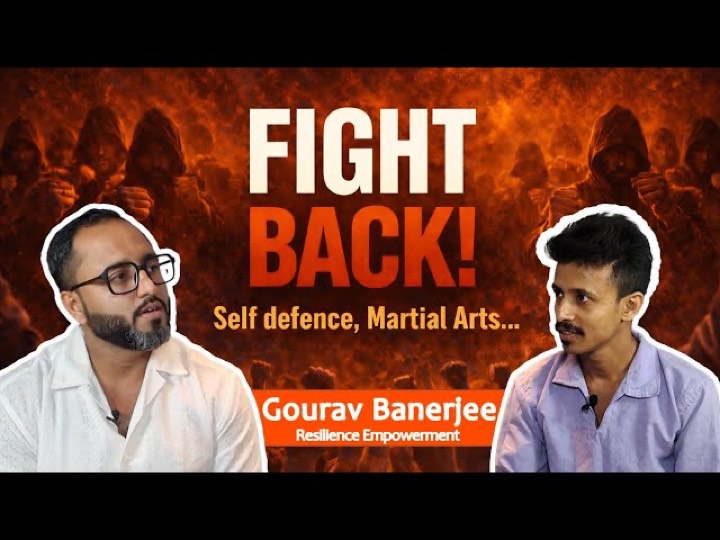
This episode follows Dr. Prabir Basu on men's sexual health, and Barun draws the link himself: most men do not know the word andrologist, just as most do not know which laws apply to them. Nandini's answer to both is awareness before the crisis. Her checklist is unusually concrete for a podcast: no joint account, no early registry, no gold that becomes stridhan, no EMI honeymoon, a stamp-paper declaration, an investigation agency, and no panic filing for divorce. Whether or not a listener accepts her wider claims about misuse of the law, those are steps a family can take this wedding season. For another angle on self-protection, see Gourav Banerjee on self-defence; for a very different portrait of one determined person in Bengal, see Karimul Haque, the Bike Ambulance Dada. Short cuts from this episode, including the Men's Commission and "stop fearing the police" segments, are on the DDS Clips channel.
Frequently asked questions
Who is Nandini Bhattacharjee?
Nandini Bhattacharjee is a men's rights activist and the president of the All Bengal Men's Forum (ABMF). In the episode she says she has been doing this work for nearly nine years, spent many years in the corporate world before that, sings with the ABMF music group, and speaks publicly only on men's rights, keeping her personal life entirely off social media.
What precautions does Nandini Bhattacharjee suggest before marriage?
She tells grooms and their families not to open a joint account or buy joint property, not to register the marriage long before the wedding, not to take a personal loan for a foreign honeymoon, and not to shower the bride with gold that legally becomes her stridhan. She also suggests a stamp-paper declaration from the bride's father that gifts were given voluntarily, and hiring an investigation agency to verify the other family's claims.
Is alimony a law in India, according to the episode?
Nandini says alimony does not fall under any law; it is mostly a sum agreed at the time of mutual divorce. Maintenance is different, and she accepts that some women with no income genuinely need it, but says widespread misuse means the women who truly need help often get nothing.
Which laws protect men in India?
Nandini says that with the IPC replaced by the BNS, nothing has been made specifically for men, but general provisions exist, such as the old Section 323 for assault, which a husband can use if his wife hits him. She names only two gender-neutral laws in India: POCSO and the acid-attack law. She adds that men do not even file the assault complaint, and that few people know men are among India's acid-attack victims.
What kind of cases does the All Bengal Men's Forum see most?
By far the most common, she says, are false 498A cases (now BNS 85), followed by false domestic-violence and maintenance cases, fathers being denied access to their children, false rape and POCSO complaints and corporate sexual-harassment complaints. She says Bengal is ahead of the rest of India in this kind of misuse.
How can someone reach the All Bengal Men's Forum?
She says the ABMF office in Kasba, Kolkata is open seven days a week until 8 pm, the helpline runs 24 hours, and the website has a support email and a membership form. Visitors fill in a form, submit photo ID and bring their case papers if a case already exists.
Why is there no Men's Commission in India?
Nandini says ABMF is working towards one, but believes politicians think ten times before touching the women's vote bank. Her argument is that every affected man's family has many women who suffer too, so a Men's Commission would also help women; once that is understood, she thinks it will not take long.