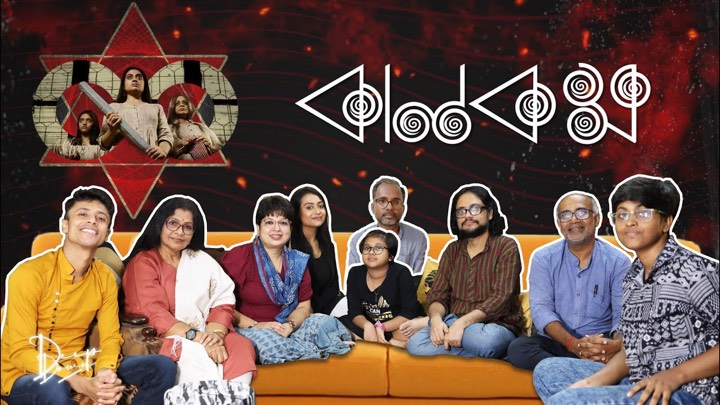
Introduction
Ask Rupsha Saha how to become a poet, and she doesn't hand over a syllabus. In the third episode of Deep Down Show বাংলা, host Barun keeps circling that question, and her answer stays the same shape every time: there was no method, only a decade-long silence and then a return. She wrote poetry through school, stopped after class 10, went quiet for about ten years, and came back to it only when the feeling demanded a page. "I just go with my own flow," she says of how she writes now — no fixed rules, no particular technique, just emotion converted into words and, sometimes, deliberate experiments with new ones.
The occasion for the conversation is a run of three Bangla books — Panjor Puran, Nosto Nirer Nostalgia, and Mrityu Postpone Korlam — the latter two launching together at the Kolkata International Book Fair on 31 January. For Saha, the year before had been what she calls a "wish fulfillment year": her first book reached readers, she got into her Master's programme, and two more manuscripts came together alongside it.
What follows is less a masterclass in craft than an unusually candid account of where a poet's lines actually come from — a guardian-angel-like idea of who a poem is written for, a habit of turning a dry leaf on the ground into a symbol, and a segment on depression where the advice isn't therapy-speak but something closer to talking yourself through the day.
Three Books and a "Wish Fulfillment" Year
Saha describes the year leading into this episode as one where things simply worked out the way she wanted them to: her book was published, she was admitted into her Master's programme and went on to study, and she wrote three books in that stretch. The first is Panjor Puran — a title she chose, she explains, because it felt close to the heart, tracing a movement from the past into the present.
The other two, Nosto Nirer Nostalgia and Mrityu Postpone Korlam, were both due out at the Kolkata Book Fair on 31 January, alongside the already-published Panjor Puran — meaning all three would be available at her stall at the same time. Of the title Mrityu Postpone Korlam ("I Postponed Death"), she explains the idea behind it in terms of a creator who reaches a point of wanting to give up, doesn't go through with it, and starts over from that low point — a frame she connects to real stories of people who face a similarly difficult moment and come out the other side. The book's closing piece, she says, is built around exactly that idea: that even when everything in a person's life feels finished, something new can still begin after the ending.
How She Became a Poet: No Method, Just Flow
Pressed on process, Saha is consistent about not having one. Her writing history splits cleanly into "before class 10" and "after a ten-year gap" — a long stretch where she wasn't writing poetry at all. When she returned to it, she says the appeal was in how neatly a poem can carry something complicated: she takes an emotion, works out how to represent it, and calls that her own creativity rather than a borrowed technique. "I just go with my own flow" is how she puts it — writing without a fixed rule or method, and experimenting with unfamiliar words when a feeling calls for one.
She also credits a mentor she describes in father-like terms, along with several teachers along the way, for helping her first book find a publisher and for giving her direct feedback on her writing over the years — encouragement she says she is genuinely grateful for.
Who a Poem Is Written For
Barun asks a question that sounds simple and isn't: who is Saha thinking of when she writes? Her answer moves through several layers. Sometimes it's her own experience and her own thinking. Sometimes, when she has met a particular person, that person becomes something like a "source of god" or a guardian angel in her mind, and she writes toward that image of them. Other times, a poem isn't written for or about anyone specific — she gathers small fragments of different experiences from different moments and folds them together into a single piece. And sometimes, she admits plainly, a poem is written purely for herself, with no reader in mind at all, while other pieces are written with the reader specifically in mind.
Bengali or English: Choosing the Language of a Poem
Most of Saha's writing is in Bangla, but she has written in English too, and the conversation turns to why. She says she leaned on English for some pieces because it reached more people at the time — a practical choice, not a judgment that her English writing is somehow better than her Bangla. She's careful to say she isn't taking an extreme position in the broader Bangla-versus-English debate; her own instinct is that expressing yourself matters more than which language you do it in.
Looking ahead, though, she wants her writing to become easier to enter. She says her current poetry can be difficult for readers who don't already have a habit of reading poetry, and that future work should be simpler — something a wider range of readers can pick up and follow without friction.
Getting Out of Depression: Self-Talk Over Silence
The episode's most extended detour is about low periods and depression, and Saha treats it as something ordinary rather than exceptional — she says feeling low happens to almost everyone in smaller doses, even when people don't always articulate it that way. Her core piece of advice is self-talk: having an honest conversation with yourself, rather than only sitting with a bad feeling or only unloading the problem on someone else. She's specific that self-talk should not become a way of dragging yourself down further — the goal is to also remind yourself what is still good in your life, not just what's wrong.
She adds a few concrete habits: not comparing your situation to other people's, since she says almost everyone she knows has been through some version of the same low point; being grateful for whoever is actually present for you; and, when talking to others, steering the conversation toward solutions rather than dwelling only on the problem. Underneath all of it sits a simpler belief — that there is something above helping things resolve, arriving through a person or an event, and that nothing bad stays permanent.
Where Her Poems Come From: Watching a Dry Leaf
Asked what feeds her creativity, Saha points to observation. She describes noticing small, ordinary details around her and personifying them — a dry leaf lying near her feet, for instance, becomes in her mind a symbol for a chapter of life closing. She says she does this often, folding an observed detail into a poem as a kind of shorthand for something larger. She also recalls, as an example of following her emotions rather than logic, once giving away a pair of sandals to someone in need and walking home barefoot a long distance afterward — something she jokingly calls "pagolami" (a bit of madness) but says mattered to her because her emotions, to her, are the more important thing to listen to.
Favourite Poets and What Comes Next
Among Bangladeshi poets, Saha names Al Mahmud, Shamsur Rahman and Taslima Nasrin as writers whose work she loves, alongside many contemporary writers she says she doesn't single out individually. She adds that re-reading any writer's work at different points in life keeps surfacing new thoughts, because your own thinking has moved on between readings.
On what's next, her list goes beyond poetry: she wants to attempt a novel, try scriptwriting, and lean further into songwriting — she already writes lyrics and describes wanting to work more seriously as a lyricist and, eventually, as a fuller creative writer.
Where to Find the Books
Panjor Puran, Nosto Nirer Nostalgia and Mrityu Postpone Korlam are all described as available together from Saha's stall at the Kolkata International Book Fair from 31 January, with the exact stall number shared in the video's description. She also points to College Street in Kolkata, and for readers in Bangladesh, mentions the Rokomari bookstore as a place to order. Direct orders and questions, per the episode description, can also go through the comments or a phone number listed there.
Who is Rupsha Saha
Rupsha Saha is a Bangla poet, lyricist and singer, and the author of three books — Panjor Puran, Nosto Nirer Nostalgia and Mrityu Postpone Korlam. In this episode she describes writing poetry through school, a roughly ten-year gap before returning to it, and a self-taught process built on emotion and experimentation rather than formal technique. Alongside poetry, she writes song lyrics and sings, and says she is currently pursuing a Master's degree.
Why This Conversation Matters
Most conversations about "how to become a creative person" default to routines and rules. This one is useful precisely because it refuses that shape — Saha's honest answer is that she didn't follow a method, she followed a decade-long silence and then her own flow, and that the same instinct that produces a poem also produces the self-talk that gets her through a bad week. For anyone in Bengal trying to write, sing or simply hold themselves together through a low period, that combination — craft and coping treated as the same muscle — is arguably the more transferable lesson here than any specific writing tip.
For more on people building creative work on their own terms, see the Deep Down Show conversation on Bengali cinema's distribution problem with Satadeep Saha, and the episode on making Kalkokkho, a National Award-winning film shot on almost no budget.
Frequently asked questions
How does Rupsha Saha say someone can become a poet?
She doesn't offer a fixed method. She wrote poetry through school until class 10, then had roughly a ten-year gap before returning to it. Since then, she says she 'just goes with her own flow', turning emotions into writing and experimenting with new words rather than following any set technique.
What are Rupsha Saha's three published books?
Panjor Puran, Nosto Nirer Nostalgia, and Mrityu Postpone Korlam. Panjor Puran was already out at the time of this episode, and the other two launched together at the Kolkata International Book Fair on 31 January.
Where can readers buy Rupsha Saha's books?
She points listeners to her stall at the Kolkata International Book Fair, College Street, and to comments or a phone number shared in the video description for direct orders. For readers in Bangladesh, she mentions Rokomari's bookstore as an option.
Who are Rupsha Saha's favourite poets?
Among Bangladeshi poets, she names Al Mahmud, Shamsur Rahman and Taslima Nasrin as writers whose work she loves, alongside many contemporary poets and writers she says she doesn't single out by name.
How does Rupsha Saha say she copes with depression or low periods?
She emphasises self-talk — being able to have an honest conversation with yourself rather than just sitting with the bad feeling. She also talks about giving yourself time, not comparing your situation to other people's, focusing on what is still good in your life, and trusting that help eventually arrives through some person or event.
Does Rupsha Saha write in Bangla or English?
Mostly Bangla, though she has written some poems in English. She says she chose English for certain pieces because it reached a wider audience at the time, not because she considers her English writing superior, and that she wants her future work to be simpler and more accessible in Bangla.
What is Rupsha Saha working on next?
Beyond her three poetry books, she talks about wanting to try a novel, scriptwriting, and songwriting — she already writes lyrics and describes wanting to work more formally as a lyricist and creative writer.