Introduction
Shortly before this conversation, Kalkokkho (House of Time) had already picked up the National Film Award for Best Bengali Film — a strange kind of validation for a film that, by its own makers' account, was shot with almost no money in the middle of a pandemic. In this episode, hosts Barun Kumar Choudhury and Rickta Mukherjee sit down with the people who made it happen: directors Sharmistha Maiti and Rajdeep Paul, and actors Sreelekha Mukherjee, Janardan Ghosh, Tannistha Biswas and Amit Saha.
The question the title asks — can a movie win awards after being made on a low budget — turns out to be the wrong question by the end of the hour. The more interesting one the guests keep circling back to is why a small, uncomfortable, unconventional film about isolation and time found any audience at all, and what it actually took, day to day, to shoot it without money, without stars, and without the resources of a normal production.
What emerges is less a victory lap than a working diary: how a lockdown-era short-film idea grew into a feature, how a cast with a mix of theatre and screen backgrounds learned to move together in a house they'd rented for rehearsals, and how the same team that won a national award also got turned down while pitching the film in Bombay.
A Story Born From Lockdown
Kalkokkho's atmosphere, the makers explain, came directly from what the pandemic did to ordinary households. They describe a family sealed inside an apartment — a mother, her child, her husband — afraid to even touch another person, terrified of the outside world creeping through a door. One story that comes up is of a neighbour whose mother went to the hospital during that period, caught an infection there, and never came home. The team also recalls a small child in the building calling out again and again toward a neighbouring house — an image they return to as an example of how children absorbed that fear without fully understanding it.
The guests connect this directly to the film's larger theme: a period when saving a life became so paramount that the dignity of the living person almost stopped mattering, when people started treating each other — and being treated — a little like they were already gone. That discomfort, the sense of watching the line between "I," "you" and "they" harden inside a locked home, is what the team says they were chasing tonally in Kalkokkho, well before it had anything to do with awards or box office.
Interestingly, part of the film's DNA predates the pandemic altogether. One of the directors traces an early version of the material back to a student graduation project — a short film built around a triangular or long-distance relationship. That earlier project, made for a young audience, ended up connecting most strongly with older viewers instead, a reaction the team says surprised them and quietly gave them the confidence to attempt something as unconventional as Kalkokkho later on.
Building a Film With No Room for Error
Because there was so little money to work with, the team leaned hard on preparation. Sharmistha Maiti is credited by the cast with running rigorous workshops and rehearsals before the shoot began — sessions intense enough, one actor says, that none of the performers ran into real difficulty once cameras rolled. The crew rented a house purely for rehearsal, separate from the house used for the final shoot, and worked through scenes there first.
The actual shooting schedule, by the cast's description, moved in loops — returning to the same one or two locations again and again across the production. That looping structure is what made continuity, they say, the single hardest technical problem of the entire shoot: matching hairstyles, costume details, and even the exact emotional pitch of a line from one day's shoot to a scene filmed weeks apart. The same dialogue might be repeated across several takes with only a word or two changed, but the emotional colour and delivery had to line up precisely with footage shot much earlier — a discipline the team compares to matching the exact shade and drape of a saree across different days of filming.
One of the lighter moments in the conversation is what the group calls the "dhuno controversy" — a nod to the show's own chapter marker for this bit. It refers to a backstage trick for getting real tears on camera: using dhuno (incense) smoke, along with a damp cloth, to make an actor's eyes water convincingly right before a close-up, since holding back a real cry on cue is far harder to fake than audiences assume.
Theatre Bodies, Camera Eyes
Several of the actors, including Sreelekha Mukherjee, come to Kalkokkho with backgrounds in theatre. The conversation turns to how that stage training translated — or didn't — to film acting. The group agrees that theatre builds a kind of discipline: performers used to stage work already know how to study a character's flaws and virtues in depth, and that habit of character analysis carried over directly into their process on Kalkokkho.
But camera work demanded its own, separate unlearning. On stage, an actor projects for an audience sitting at a distance; on camera, with an ensemble that also included people without formal acting training, the same instinct can read as too big. The team describes deliberately building camera-consciousness during rehearsals — learning where the frame's attention actually falls — as distinct from stage awareness. The conversation briefly touches on a well-known observation from actor Naseeruddin Shah about the relationship between cinema and theatre acting, which the group uses as a reference point for how differently the two disciplines train an actor's instincts.
The character-building process itself, the actors say, mixed independent homework with group discussion: each performer studied their character's strengths and weaknesses on their own, then brought disagreements to the directors, who sometimes gave a direct answer and sometimes left the actors to reason it out logically among themselves during rehearsal.
Can a Small Film Win Big?
A recurring argument in the second half of the episode is that a film's worth cannot be measured only by ticket sales. The guests point out that cinema, unlike a scientific invention judged purely by results, is meant to make an audience feel something — fear, laughter, wonder, grief, compassion — the classical range of emotions Indian aesthetic theory groups as rasa. If a film succeeds at that, they argue, that is itself a form of success, whatever it did or didn't do commercially.
They extend the argument with a plain analogy: if a buffet serves nothing but biryani, guests get tired of it within a couple of days, however good that one dish is. An industry that only ever produces the commercially safe formula, they suggest, eventually exhausts its own audience the same way. Variety, even when individual "different" films fail to recover their budget, keeps the wider industry alive — while an industry that punishes every attempt at something else with financial loss will keep shrinking the range of films that get made at all.
The conversation also brings up repeat viewership as its own kind of proof: the team recalls entire school and college classes going to watch Kalkokkho once, then coming back to watch it again with friends, and messages arriving days later from viewers still processing what they'd seen. That kind of response, they argue, says as much about a film's impact as an opening-weekend number does.
They test this argument against Shah Rukh Khan's blockbuster Jawan, debating whether a huge screen count and box-office total really means a film has reached "the masses," or whether it mainly reflects urban multiplex audiences — while a very different, harder-to-measure audience still watches films on phones, downloads, or late at night, in patterns box-office reporting doesn't capture well.
The Distribution Problem
For all the artistic conviction in the room, the team is candid about how badly distribution still worked against them. They recount pitching Kalkokkho to producers in Bombay and, in their own words, having "faced this setback" — a blunt acknowledgment that critical and even national recognition doesn't automatically open doors for a small Bengali film outside its home market. The hosts also raise the possibility of an OTT release and, briefly, whether a sequel to Kalkokkho might ever happen — questions the guests field without committing to specifics.
Who Made Kalkokkho
Kalkokkho (House of Time) was directed by Sharmistha Maiti and Rajdeep Paul, both present on this episode alongside cast members Sreelekha Mukherjee, Janardan Ghosh, Tannistha Biswas and Amit Saha. The film went on to win the National Film Award for Best Bengali Film after building a following through festivals, nominations and word-of-mouth screenings — a trajectory this episode traces from the inside, starting with a shoot that had almost none of the resources typically associated with award-winning cinema.
Why This Conversation Matters
Most conversations about a national award focus on the trophy moment. This one instead sits with the unglamorous mechanics that came before it — rented rehearsal houses, looping shoot schedules, incense-smoke tear tricks, and a pitch meeting in Bombay that didn't go anywhere. For anyone in Bengal trying to make a film without a studio behind them, that is arguably more useful than the award itself: proof that a story about dread, isolation and the pandemic, made almost entirely on discipline rather than budget, could still travel from a rented flat to a national stage.
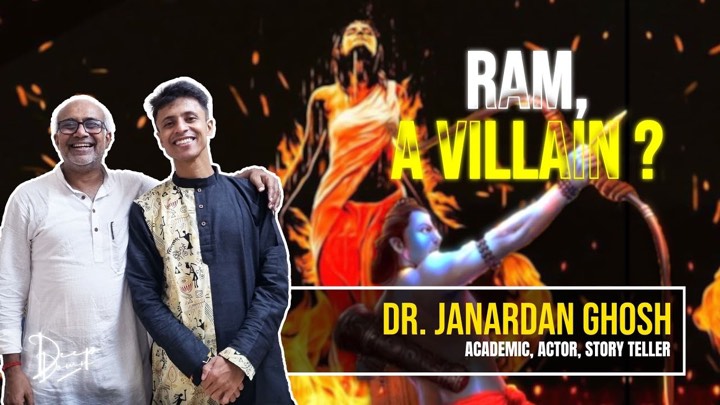
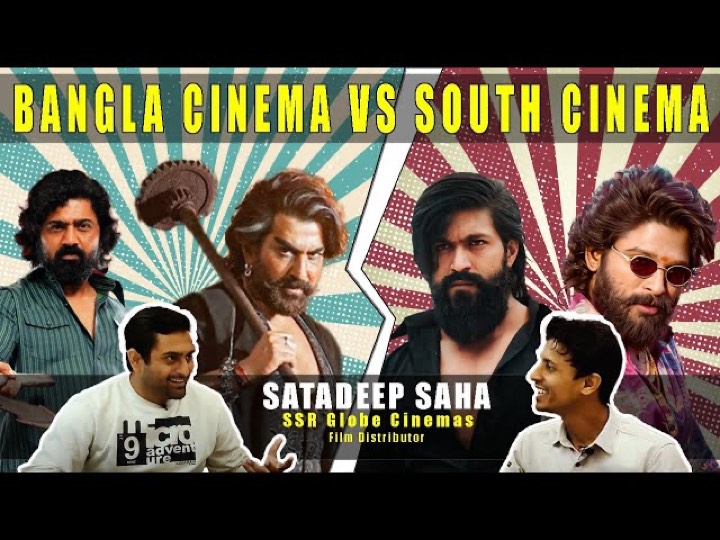
For more on the film's themes and the wider debate around Bengali cinema's reach, see the companion conversation on Ramayan's controversies with Dr. Janardan Ghosh, where Kalkokkho's origins are discussed from another angle, and the Deep Down Show episode on film distribution in Bangla cinema with Satadeep Saha, which picks up the exact distribution problem raised here. Short highlights from this and other episodes are also cut for the DDS Clips channel.
Frequently asked questions
What is Kalkokkho (House of Time) about?
It is a Bengali feature film shot on a very limited budget during the COVID-19 pandemic. In this episode, the makers describe drawing on the dread, isolation and confinement of lockdown life — families sealed indoors, fear of contact with others, and the blurred line between the living and the dead — to build the film's mood.
Did Kalkokkho win any awards?
Yes. The film won the National Film Award for Best Bengali Film, a fact the hosts and guests discuss at length, along with the film's earlier festival nominations and its life on the film-club and screening circuit.
Who directed and acted in Kalkokkho?
It was directed by Sharmistha Maiti and Rajdeep Paul. The cast in this episode includes Sreelekha Mukherjee, Janardan Ghosh, Tannistha Biswas and Amit Saha, several of whom recall this as an early or first collaboration with the directors.
How did the small crew manage a film with such a low budget?
The team describes long pre-production workshops, group rehearsals, and a shooting schedule that cycled back to the same one or two locations again and again. Because of that loop, keeping continuity — hair, costume, and the exact emotional pitch of a scene — became, by their own account, the single hardest part of the shoot.
What was the 'dhuno controversy' mentioned in the episode?
It is a lightly teased backstage story about how the crew used incense smoke and a damp cloth to make an actor's eyes water convincingly for an emotional close-up, since holding back real tears on camera is harder to fake than it looks.
Does the episode discuss why good films struggle to find an audience?
Yes. The guests argue that an industry built only on proven commercial formulas eventually bores audiences, comparing it to a buffet that serves nothing but biryani. They also talk about the difficulty of distributing a small film, including a setback they faced while pitching Kalkokkho to producers in Bombay.
Does theatre background help actors on camera?
Several guests with theatre roots say it does and doesn't — stage discipline builds character study and stamina, but working with a camera and an ensemble that includes non-actors demanded its own, separate kind of unlearning during Kalkokkho's rehearsals.