Introduction
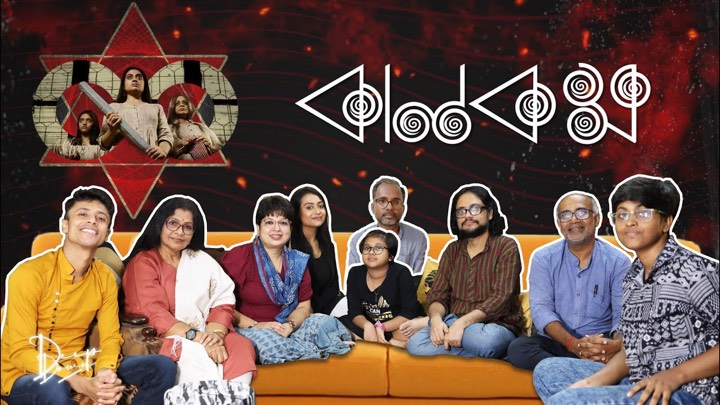
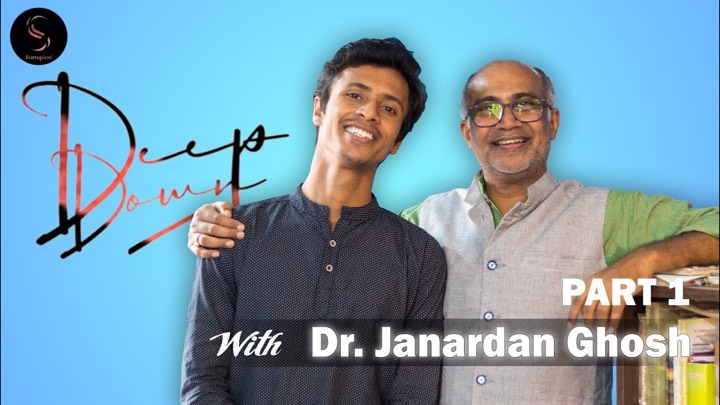
Dr. Janardan Ghosh returns to Deep Down Show for a second conversation with host Barun, and this time the subject is the Ramayan itself — not as scripture to be recited, but as a text he thinks Bengalis should be allowed to question. Ghosh is a Research Associate at Ramakrishna Mission Vivekananda University in Belur, and outside academia he is a spiritual speaker, actor and storyteller associated with Oglam Theatre. The episode opens, though, with a different achievement: his feature film Kalkokkho (House of Time) had just won the National Film Award for Best Bengali Film.
The two threads — the film and the epic — turn out to share a spine. Kalkokkho was shot during the COVID lockdown on what Ghosh calls a shoestring budget, and its story of a kidnapped doctor living through repetitive, confined days becomes, in his hands, a small parable about people cut off from the rhythms of nature. That same idea — human distance from nature, and what it costs — is what carries him into the Ramayan, which he has also turned into a solo storytelling performance called Ramayan: Fractured, Fixed & Foretold.
What follows is a long, unhurried conversation about the epic's uncomfortable corners: why Sita keeps having to prove herself, what really happened to Surpanakha, whether Ravan is simply a villain, and why Ghosh believes there was never meant to be only one Ramayan.
A National Award, made on a shoestring
Ghosh recalls that Kalkokkho, directed by Sharmistha Maity and Rajdeep Paul and produced by Aurora Film Corporation, was made under real constraint — a COVID-era shoot, a tight budget, and a crew figuring out funding as they went, since theatres and film financing were both effectively shut down at the time. He credits the directors for building an accomplished film out of minimalism, and singles out the cinematography for working within a story confined largely to a single house. The film's core, as he describes it, is the story of an ordinary doctor who is abducted and held during the pandemic, and whose gradual change over that period becomes, in Ghosh's reading, a portrait of how confined, repetitive lockdown days quietly reshaped everyone's sense of time. (Episode 14 of this show goes deeper into the film itself.)
Kathabhinaya: telling the Ramayan through nature
Ghosh's own performance piece grew out of this same interest in nature and cycles. He describes Ramayan: Fractured, Fixed & Foretold as a Kathabhinaya — a storytelling performance, not a lecture — built in layers: multimedia elements, a live narration, and an alpana that he draws on the ground as the story is being told, finishing the drawing exactly as the story ends. He performs it mostly in English, a deliberate choice, he says, to carry it beyond Bengal to university audiences and international workshops, though he has also been asked to eventually bring a Bangla version home.
The performance's anchor is the traditional account of how the Ramayan itself came to be: Valmiki, watching a pair of mating curlews (krauncha birds), sees a hunter kill one of them, and the surviving bird's grief is said to have turned into the epic's very first verse — sorrow (shoka) becoming poetry (shloka). From there, Ghosh builds an argument that nature runs through the whole epic: Sita, born of the earth, eventually returns to it; exile and forest life recur throughout the story; and even the animals who help Ram — the bears and monkeys — represent a bond with nature that Ghosh contrasts with how casually that same bond is treated today.
Which Ramayan should we believe?
A recurring question in the conversation is which version of the Ramayan is the "real" one. Ghosh points to scholarship — he names the scholar Ramanujan — that documents hundreds, even thousands, of tellings of the Ramayan across regions, languages and centuries, from Valmiki's Sanskrit original onward. His own image for this is a tree: Valmiki's telling is the trunk, and every regional, folk or later retelling is a branch grown from it. No single branch, he argues, can be called the whole tree.
His conclusion is a personal one rather than a scholarly verdict: for him, the "correct" Ramayan is whichever version's truth resonates with a reader's own understanding. He resists calling the epic a history book with one settled fact to be proven or disproven, describing it instead as a reservoir the reader draws meaning from.
Sita's tests, and the epic's gender politics
Much of the conversation returns to Sita. Ghosh notes that across the epic she is repeatedly made to prove herself — pushed into tests and hardship again and again — and he frames this less as a fact to be defended than as a question worth sitting with. He argues that both men and women suffer in the Ramayan, but along different, gendered lines, and that the repeated demand placed on Sita reflects patriarchal attitudes that predate the epic itself rather than originating with it.
Surpanakha, reconsidered
The episode's most pointed section is on Surpanakha. Ghosh describes her as a bold personality who approaches Ram and Lakshman with an open, undisguised sexual interest — a directness he contrasts with Sita's more restrained characterisation. He raises the question of proportion: whether disfiguring her was a fitting response to an unwelcome advance, or whether, as he suggests, the nose-cutting carries a more symbolic meaning within the epic's storytelling than a literal one. He is careful to frame this as one possible, debatable reading rather than a settled answer, and repeatedly urges listeners not to view any of the epic's characters through too narrow a lens.
The conversation also touches, more briefly, on Ram's sister Shanta, who according to the story Ghosh recounts drew the ascetic Rishi Rishyashringa to the kingdom to perform a yajna that ended a long drought.
Ravan's yajna, and the ends of Ram, Sita and Lakshman
Ghosh also brings up a detail he says he only recently learned: that in one telling, Ravan's own yajna could not be considered complete without a wife present, so he kept the captive Sita beside him for the ritual. He uses this, and the parallel sacrifices made by Ram, Ravan and Sita across the story, to push back on flattening any of the three into a simple hero or villain.
Toward the end, the conversation turns to how the three central figures leave the story: Sita, as Ghosh tells it, merges back into the earth she was born from; Lakshman, bound by an earlier condition, gives up his life in the Sarayu river; and Ram, grieving his brother's death, follows him into the same river soon after. Ghosh reads this ending as part of the same cyclical pattern he sees running through the whole epic — birth from and return to nature.
Who is Dr. Janardan Ghosh
Dr. Janardan Ghosh works as a Research Associate at Ramakrishna Mission Vivekananda University, Belur, alongside his work as a spiritual speaker, actor and storyteller with Oglam Theatre. His feature film Kalkokkho (House of Time), on which he collaborated with directors Sharmistha Maity and Rajdeep Paul, won the National Film Award for Best Bengali Film. He has separately built a solo Kathabhinaya performance, Ramayan: Fractured, Fixed & Foretold, which he has taken to universities and workshops, including a talk in Chicago, reading the epic through an environmental and eco-feminist lens.
Why this conversation matters
This episode does not try to settle whether Sita was wronged or whether Surpanakha deserved her punishment. What Ghosh offers instead is permission to ask the questions at all — his repeated point is that Bengali readers often inherit the Ramayan as a fixed moral ledger, when the tradition itself, in its hundreds of retellings, was always plural. For listeners who grew up with one version of the epic, hearing a scholar and performer lay out its grey areas, its regional variants, and its more uncomfortable episodes is a reminder that questioning a scripture, in his framing, is not the same as rejecting it.
For more on the film that opens this conversation, see the Kalkokkho (House of Time) episode, and for another take on the epic's most contested figure, see Ravan: Hero or Villain. Dr. Ghosh's earlier appearance on the show, on spirituality versus religion, is at Find Your Passion. Short clips from Deep Down Show episodes are posted on the DDS Clips channel.
Frequently asked questions
Who is Dr. Janardan Ghosh?
He is a Research Associate at Ramakrishna Mission Vivekananda University, Belur, and also works as a spiritual speaker, actor and storyteller. He is closely associated with Oglam Theatre and wrote/features in the award-winning film Kalkokkho (House of Time).
What is Kalkokkho (House of Time) about?
It is a feature film, directed by Sharmistha Maity and Rajdeep Paul and produced by Aurora Film Corporation, shot during the COVID-19 lockdown on a very limited budget. In the episode, Ghosh describes its story as centring on a doctor who is kidnapped, and on the repetitive, confined rhythm of lockdown life. The film went on to win the National Film Award for Best Bengali Film.
What is 'Ramayan: Fractured, Fixed & Foretold'?
It is Ghosh's own Kathabhinaya (storytelling performance) built around a folk-rooted, nature-centred reading of the Ramayan. He performs it mostly in English to reach a wider, international audience, drawing an alpana on the ground live as the story unfolds.
Why does Sita have to face tests repeatedly in the Ramayan?
Ghosh frames this as a question about gender politics embedded in the epic rather than a settled answer. He argues that both Ram and Sita suffer through the story in different, gendered ways, and that the repeated demand for Sita's proof reflects social attitudes that go back a long way.
How does the episode discuss Surpanakha and Sita?
Ghosh reads Surpanakha as a bold woman who expresses her desire directly, unlike Sita's more restrained arc, and questions whether her disfigurement was a proportionate response. He suggests the nose-cutting may carry a symbolic rather than a purely literal meaning within the epic.
Are there really hundreds of versions of the Ramayan?
Ghosh refers to scholarship, citing the name Ramanujan, that counts the Ramayan's tellings in the hundreds across regions, languages and centuries. His conclusion is that Valmiki's telling is the trunk of a tree with many branches, and that no one branch can claim to be the whole tree.
How does the episode describe the deaths of Ram, Sita and Lakshman?
As recounted in the episode, Sita is said to merge back into the earth, Lakshman gives up his life in the Sarayu river to honour an earlier condition, and Ram, grieving his brother, follows him into the same river soon after. Ghosh reads this as part of a larger cyclical pattern running through the epic.